Attack surface management

Attack surface mapping: See what attackers see, before they do.

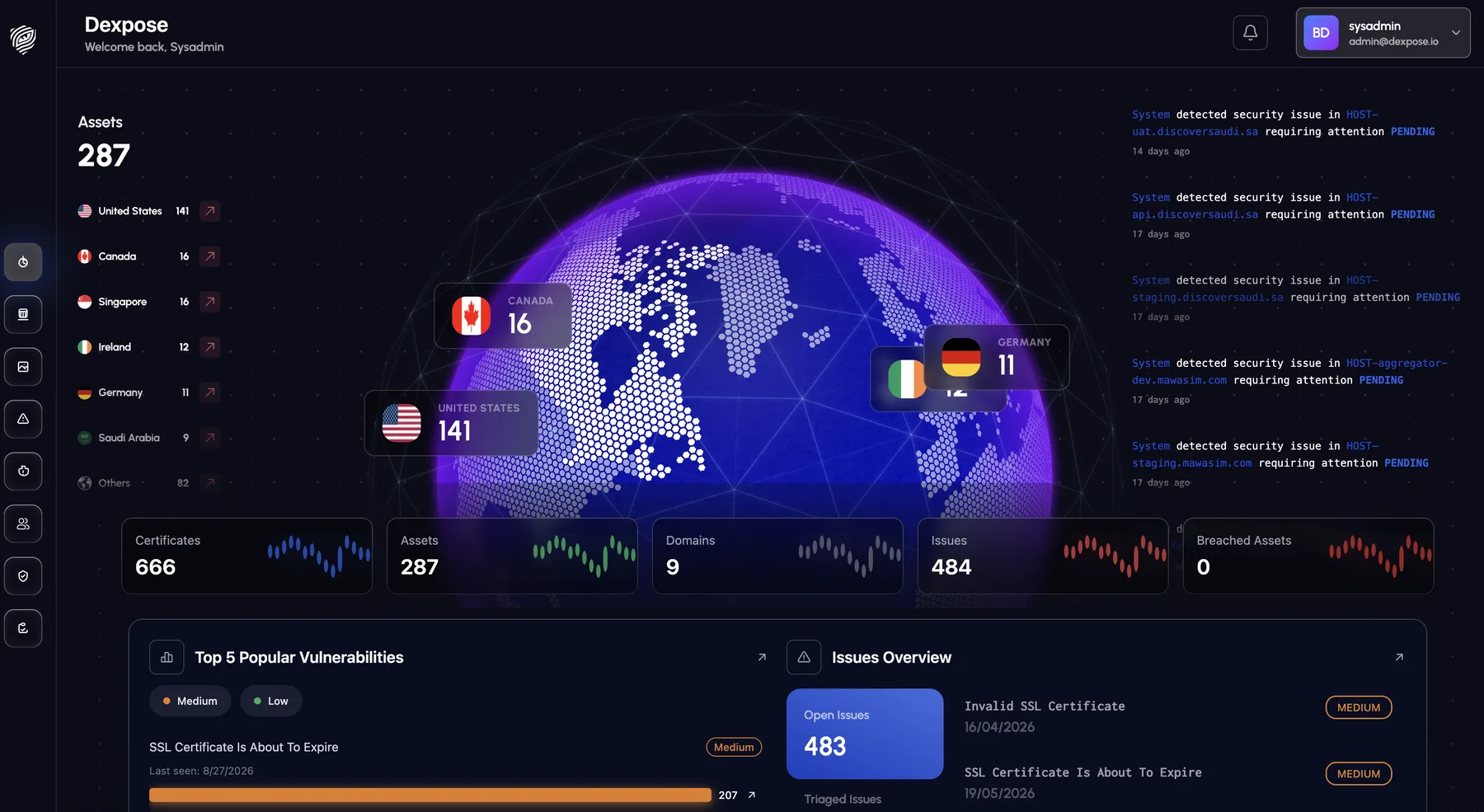
The DeXpose attack surface dashboard: global asset map, severity over time and open findings

We map every internet-facing asset that belongs to you: domains, subdomains, cloud workloads, APIs, exposed services and the infrastructure your team lost track of. Then our analysts tell you which of it is exploitable today.

Attack
The hybrid approach

Machine speed. Human judgment.

Automation finds the signal around the clock. Our offensive security analysts decide what is real, exploitable and worth your team's time. Nothing reaches you unverified.

01Automation

Continuous machine reconnaissance

Public sources are scanned all day: DNS, certificate logs, code repositories, search engines and cloud provider ranges. Every signal is collected, deduplicated and added to your asset graph.

  • 14 source familiespolled continuously
  • Anomaly and drift detectionnew hosts, changed services, expired certificates
  • Minutes, not daysfrom a new signal to a candidate finding
02Analysts

Verification by offensive security analysts

Every alert that reaches your team has been reviewed by a person. Analysts confirm the finding is exploitable, set the right severity and remove the noise before you see it.

  • False positives removed at sourcebefore they reach your queue
  • Manual exploit checkson every critical finding
  • Live investigation supportin your Slack or Teams channel
False positives removed before they reach you
94%
Critical findings reviewed by an analyst
100%
Average analyst response to a critical incident
< 15 min
Analyst support for active incidents
24/7

We do not pass alerts over the wall. When a finding is confirmed, an analyst is in your channel within minutes to help your team understand it and act on it. That is the difference between a product and a service.

DeXposeLead analyst, offensive security team
The problem

Your real attack surface is larger than your asset inventory.

Cloud sprawl, shadow IT, acquisitions and forgotten subdomains create exposure that vulnerability scanners never see, because nobody told them where to look. We map your perimeter from the outside, the way an attacker does, and the gap between the two lists is where incidents start.

See your gap for free
  1. 01

    Shadow IT: assets you do not know about

    Marketing microsites, public development environments, abandoned subdomains and storage buckets spun up for a sprint and never closed. Each one is a way in that no one is patching.

    What we find: unregistered subdomains, orphaned cloud resources, exposed dev and staging hosts
  2. 02

    Cloud drift: configurations that change every day

    Multi-cloud deployments, Kubernetes ingress and short-lived container hosts shift constantly. A static inventory is out of date within hours; only continuous discovery keeps up.

    What we find: new public IPs and ports, changed services, load balancers and buckets that went public
  3. 03

    Forgotten assets: things nobody switched off

    Expired certificates, dangling DNS records that point at nothing, old staging hosts and test APIs left online. Attackers look for exactly these first, because nobody is watching them.

    What we find: subdomain takeover candidates, expired and weak TLS, end-of-life software still reachable
Capabilities

One platform. Every asset. Every layer.

From discovery to remediation, one attack surface map replaces the scanners, spreadsheets and scripts your team keeps in sync by hand.

Continuous Discovery

Find every asset that carries your name on the internet.

Passive reconnaissance across certificate transparency logs, public DNS, search engines, code repositories and cloud provider ranges surfaces the assets your inventory never recorded.

  • Subdomain enumeration via 200+ resolvers and certificate logs
  • Cloud footprint across AWS, GCP, Azure, OCI and DigitalOcean
  • Open ports, services and TLS certificate health
  • Code and secret leakage on GitHub, GitLab and Bitbucket
  • Mobile app store presence and rogue apps
  • WHOIS, ASN and IP block attribution
Asset Inventory & Mapping

An always-current map of everything you own.

Every discovered asset is normalized, deduplicated and tagged with owner, business unit and environment. Daily diffs show what changed, not just what exists.

  • Automatic ownership by domain, business unit and geography
  • Daily diff of additions, changes and removals
  • Environment tags: production, staging, dev, abandoned
  • Custom tags and bulk edit for asset groups
  • Export to your CMDB or ticketing tool
Exposure & Vulnerability Detection

See which of your assets can be attacked today.

Each asset is checked for exposed services, known vulnerabilities, misconfigurations and weak encryption, from the outside, the way an attacker would.

  • Open ports and exposed admin panels, databases and RDP
  • Known CVEs on detected software versions
  • Expired or weak TLS, missing security headers
  • Exposed storage buckets and public repositories
  • Dangling DNS records open to subdomain takeover
Risk Prioritization

Stop drowning in CVSS. Fix what is actually exploitable.

Risk scoring weighs CVSS, the CISA KEV catalog, exploit-in-the-wild signals, blast radius and your own business context, so the top of the queue is always the right thing to fix first.

  • CISA KEV correlation in real time
  • Exploit prediction scoring (EPSS)
  • Blast-radius modeling from asset connectivity
  • Business-context weighting for revenue-bearing and regulated assets
  • Analyst-verified severity on every critical finding
Change Monitoring & Alerts

Know the moment your perimeter changes.

New hosts, new open ports, certificate expiries and configuration drift raise alerts where your team already works, with the context needed to act.

  • Alerts in Slack, Microsoft Teams, Jira and ServiceNow
  • Watchlists for critical assets and brands
  • Certificate expiry and DNS change warnings
  • Weekly change digest for asset owners
Reporting & Compliance

Evidence on demand. Posture in real time.

Audit-ready evidence packages and a live posture view against the frameworks you care about, without spreadsheets and without lag.

  • SOC 2, ISO 27001, PCI DSS, HIPAA and DORA mappings
  • One-click evidence export
  • Executive scorecard with trend over time
  • Per-business-unit and per-region views
Inside the platform

From the asset list to the exploit, in three clicks

Real screens from DeXpose attack surface mapping. Every host, every service and every vulnerability is one view away, with the evidence attached.

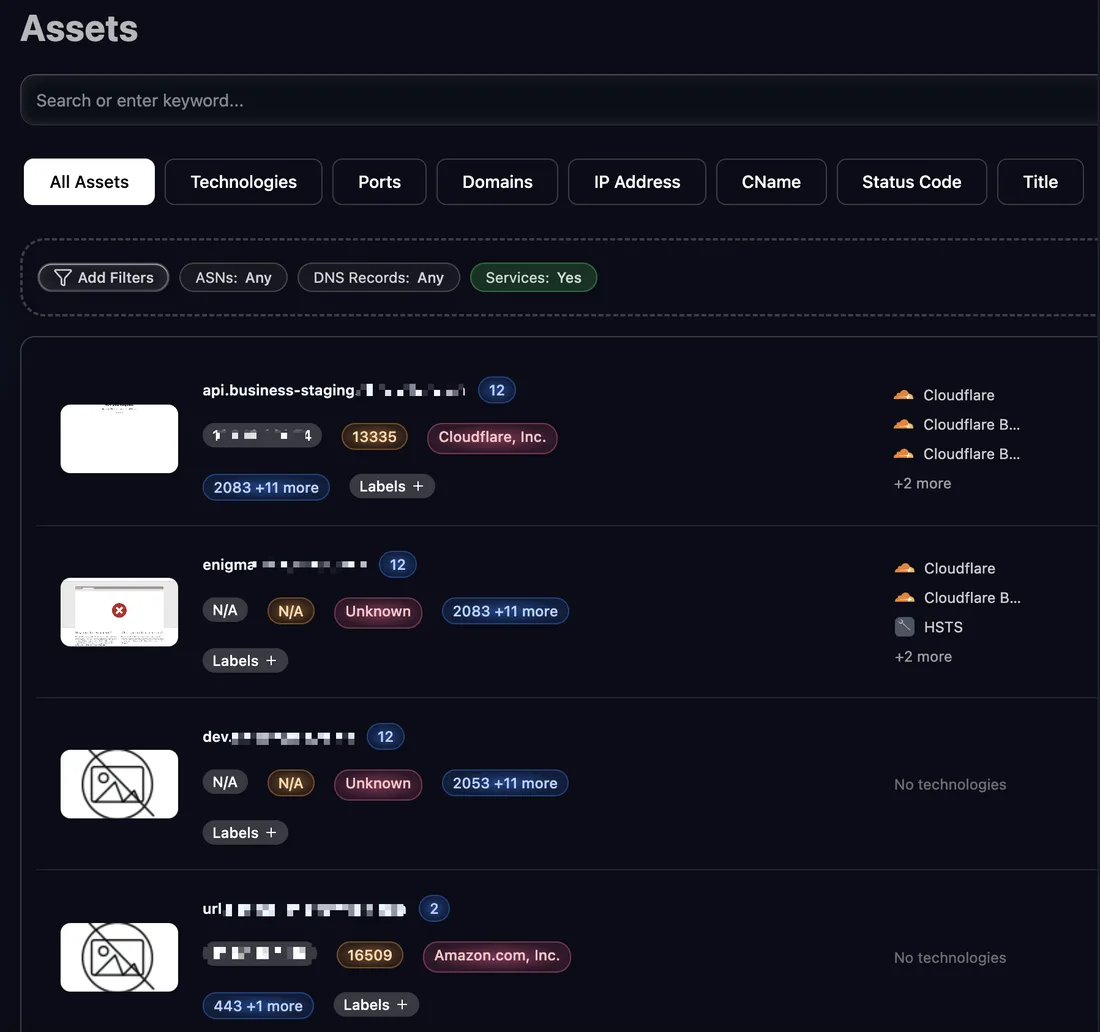
The assets explorer: every discovered host with its ports, providers, technologies and labels, filtered by ASN, DNS records and services
Asset explorerEvery discovered host with its open ports, hosting provider, CDN, technologies and labels. Filter by ASN, DNS records, services, status code or title.
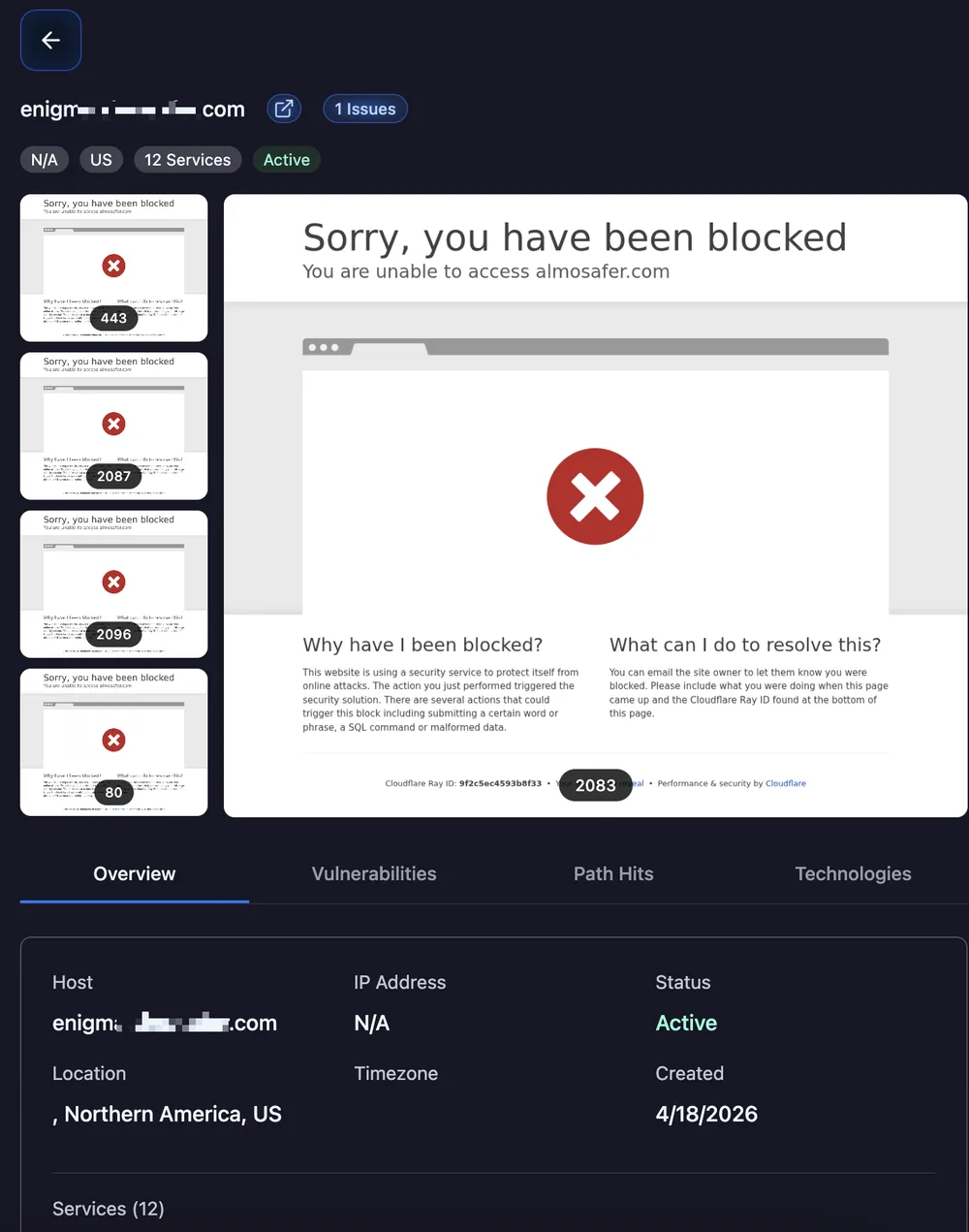
A host detail view: live screenshot of each open port, host, IP, status, location and the services running on it
Host detailA live screenshot of what each port serves, plus IP, status, location, services, path hits and technologies for the host.
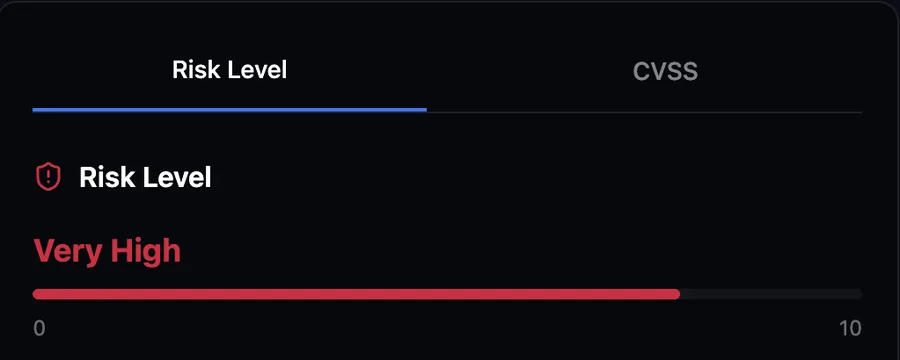
Vulnerability intelligence for CVE-2026-83549: severity, CVSS score, description, published and modified dates, product and vendor
Vulnerability intelligenceEach CVE on your assets with severity, CVSS, risk factors such as exploited in the wild, exploits, references and news.
How it works

From a domain name to a complete attack surface map.

Four stages, one continuous loop. Nothing to install and nothing to configure on your side.

  1. 1

    Onboard

    Give us a domain or company name. No agents, no DNS changes, no firewall rules. We begin mapping immediately from public sources.

    About 90 seconds
  2. 2

    Map

    14 source families connect domains, IP addresses, certificates, leaked secrets, and dark web mentions into a single asset graph.

    Continuous
  3. 3

    Prioritize

    Each finding is scored on exploitability, exposure, blast radius, and active exploitation in the wild. Not only on CVSS.

    Real-time
  4. 4

    Remediate

    Send tickets to Jira, ServiceNow, or Slack. Initiate takedowns. Hand findings to our offensive security team for validation.

    Integrated
FAQ

Questions, answered.

The questions we hear most often from security leaders evaluating ASM platforms.

Got a question that isn’t here?

Our analyst team will walk through your scope, integrations, and exposure profile on a 30-minute call.

Talk to an analyst
Do I need to deploy agents or change my network?

No. DeXpose ASM operates entirely passively from public sources — DNS, certificate transparency, code repositories, dark web feeds. There are no agents to install and no network changes required to onboard.

How is DeXpose different from a vulnerability scanner?

Vulnerability scanners assume you already know what assets exist. ASM discovers the assets in the first place — including the ones your inventory has never recorded — and prioritizes based on real-world exploitability, not just CVSS.

How do you verify the assets actually belong to me?

Every asset is attributed using WHOIS, ASN, certificate ownership, and content fingerprinting. Before any sensitive action (such as takedown), our analysts perform a manual verification step to ensure scope accuracy.

Can DeXpose ASM cover our subsidiaries and acquisitions?

Yes. Multi-entity scope is supported out of the box. Each subsidiary or acquired company can be tracked as a separate scope with its own ownership, alerts, and reporting — while rolling up to a single executive view.

How quickly can we see results?

Initial discovery completes in under an hour for most organizations. The first prioritized exposure report is delivered within 24 hours. Continuous monitoring runs from then on with alerts in under six minutes from signal to notification.

What integrations do you support?

Native integrations with Jira, ServiceNow, Slack, Microsoft Teams, Splunk, Sentinel, Elastic, and most major SIEM/SOAR platforms. A REST API and webhooks cover anything else.

Is the data tenant-isolated?

Every customer runs on a dedicated, isolated instance. Data never crosses tenant boundaries. Hosting regions include EU, US, and GCC for data-residency requirements.

What does pricing look like?

Pricing is based on the number of seed domains and assets under management — not user seats or alert volume. Most engagements include unlimited users and a quarterly review with our offensive security team.

Ready when you are

See your exposure the way attackers do.

Book a working session with our analyst team. We’ll walk through how DeXpose maps your perimeter, prioritizes what’s exploitable, and integrates into your existing workflows.