India added over 930 million internet users to the global grid in less than a decade. That connectivity brought opportunity, and it brought predators.
Cybercrime in India is no longer a niche problem confined to tech companies or government networks. It reaches ordinary people: a factory worker in Surat who loses his savings to a fake KYC call, a college student in Delhi whose photos are weaponized for extortion, a small business owner in Chennai whose customer database surfaces on the dark web before she even knows she was breached.
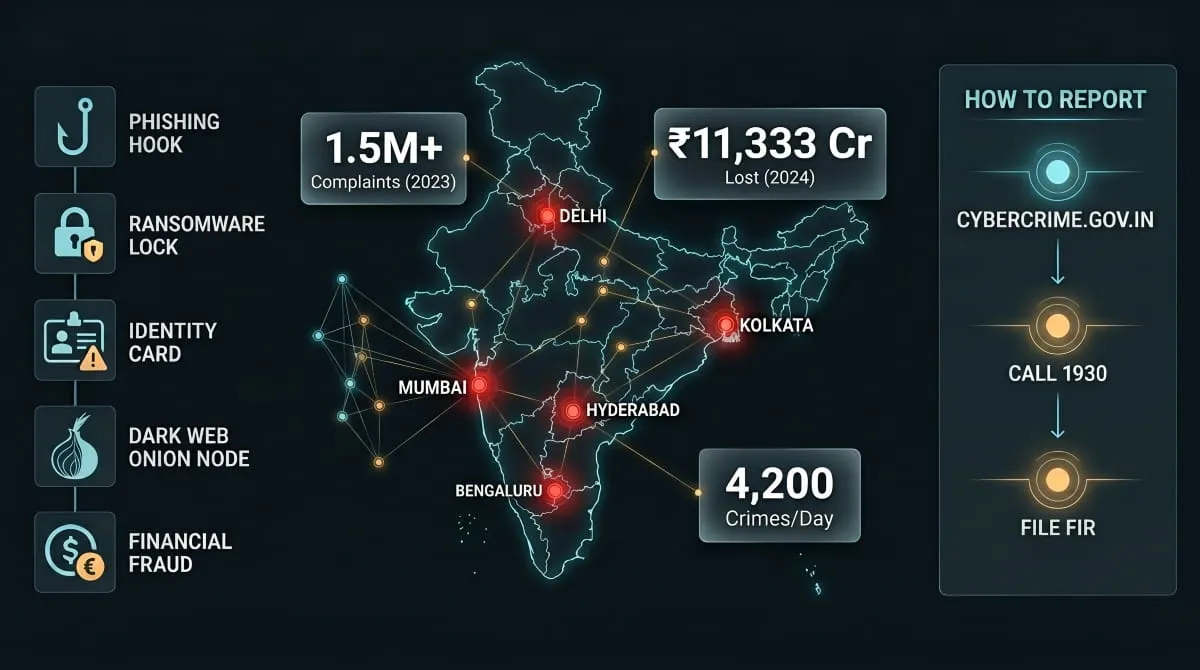
The numbers make it hard to look away. Indian authorities received over 1.5 million cybercrime complaints in 2023 alone, nearly double the previous year’s total. Financial fraud accounts for the bulk of cases, but the threat surface keeps widening: identity theft, ransomware, phishing, sextortion, and dark web data leaks are now everyday headlines, not edge cases.
Yet for most people, the response is confusion. Where do you report? Who investigates? What does Indian law actually say? What punishment does a cyber criminal face, and does anyone ever get it?
This guide answers all of it. Whether you’ve just been targeted, want to understand India’s cybercrime laws, or are trying to protect yourself before something goes wrong, you’ll find everything you need here, including how to file a complaint on the National Cyber Crime Reporting Portal, how the 1930 helpline works, real case studies, current 2025 statistics, and the prevention steps that actually matter.
What Is Cyber Crime? Definition & Legal Framework in India
Cybercrime doesn’t happen in a vacuum. It happens in your inbox, on your phone, inside your bank account. But before understanding how to fight it, you need to understand how India defines it, and what legal machinery exists to prosecute it.
Cyber Crime Definition Under Indian Law
India does not have a single statutory definition of “cyber crime” codified in a single law. Instead, the term broadly covers any criminal act in which a computer, network, or digital device is either the tool used to commit the offence or the target of the offence itself.
In practical terms, this includes hacking into someone’s email account, stealing financial credentials through phishing, publishing someone’s private images without consent, running online fraud schemes, launching ransomware attacks against businesses, and trafficking stolen data on the dark web. The common thread is digital means; the crime could not exist or could not reach its victim without technology.
What makes Indian cybercrime law particularly important to understand is that it doesn’t exist in isolation. Two primary legislations work in tandem to govern it.
Key Sections of the IT Act & IPC That Cover Cyber Offences
The Information Technology Act, 2000 (IT Act) is India’s foundational cyber law, the first attempt to create a legal framework for electronic commerce, digital records, and online offences. Over two decades later, it remains the primary statute under which most cybercrime cases are filed.
Several sections of the IT Act carry direct relevance to everyday cyber offences:
- Section 43 covers unauthorized access to computer systems and data theft, with liability for damages.
- Section 66, The core cybercrime provision. Criminalizes dishonest or fraudulent acts using a computer, punishable with up to three years in prison, a fine of up to ₹5 lakh, or both.
- Section 66C specifically targets identity theft: the fraudulent use of someone’s electronic signature, password, or unique identification feature.
- Section 66D covers cheating by impersonation using a computer resource, the legal basis for most phishing and impersonation fraud cases.
- Section 66E protects against privacy violations, including the capture or publication of private images without consent.
- Section 67 governs the publishing or transmission of obscene material in electronic form.
- Section 72 Addresses breach of confidentiality and privacy by anyone who has lawful access to electronic records.
The Indian Penal Code (IPC) operates alongside the IT Act. Older provisions covering cheating (Section 420), criminal intimidation (Section 507), defamation (Section 499), and extortion (Section 383) are regularly applied to cybercrime cases where the IT Act doesn’t fully address the nature of the offence. In many FIRs, you’ll see both IT Act sections and IPC sections invoked together.
How Indian Cyber Crime Laws Have Evolved (History & Amendments)
India’s journey with cyber law began in 2000, when the IT Act was passed primarily to enable e-commerce and give legal recognition to digital signatures and electronic contracts. Cybercrime provisions were present but thin; the internet was still nascent, and lawmakers weren’t fully anticipating what was coming.
By 2008, it was clear that the original Act wasn’t equipped to handle the scale and sophistication of emerging threats. The IT (Amendment) Act, 2008, significantly overhauled the framework. It introduced Section 66A (later struck down by the Supreme Court in 2015 in the Shreya Singhal case as unconstitutionally broad), along with new provisions on cyber terrorism (Section 66F), child pornography (Section 67B), and intermediary liability (Section 79). It also formally established the Indian Computer Emergency Response Team (CERT-In) as the national agency for cybersecurity incidents.
The 2013 amendments to the IPC, passed in the wake of the Delhi gang rape case, added Section 354D, specifically criminalizing cyberstalking, a recognition that digital harassment was a distinct and serious offence warranting its own legal definition.
More recently, the Digital Personal Data Protection Act, 2023 (DPDP Act), marks India’s most significant shift in data law since 2000. While not a cybercrime statute per se, it imposes obligations on organizations that handle personal data and establishes accountability structures that directly affect how data breaches and privacy violations are handled legally.
India’s cybercrime legal framework is still evolving. Courts continue to interpret existing provisions against new categories of offence, deepfake abuse, AI-generated fraud, dark web data markets, that no legislature had the foresight to name explicitly. That gap between the law as written and the threats as they exist today is precisely why awareness matters.
Types of Cyber Crimes Reported in India
India’s cyber threat landscape isn’t monolithic. It’s a sprawling ecosystem of overlapping attack types, each targeting a different vulnerability, your money, your identity, your privacy, or your organization’s infrastructure. Understanding the categories isn’t an academic exercise. It’s the first step toward recognizing an attack before it completes.

Financial Fraud & Online Scams
If there is one category of cybercrime that affects more Indians than any other, it’s financial fraud. The scale is staggering. In 2023, Indians lost over ₹7,000 crore to online financial fraud, and that figure does not account for reported cases.
The methods are constantly mutating. Fake KYC verification calls impersonate bank officials and pressure victims into sharing OTPs. Investment scams, often running through WhatsApp groups and Telegram channels, promise guaranteed returns and vanish once enough money is pooled. “Digital arrest” scams, where fraudsters impersonate CBI or ED officers via video call and demand immediate payment to avoid fabricated arrest warrants, have become one of the fastest-growing fraud categories in 2024 and 2025.
Part-time job scams, fake e-commerce platforms, lottery fraud, and UPI manipulation round out a category that targets everyone from retired government employees to first-time smartphone users in Tier 3 cities. The common thread is urgency and authority, manufactured pressure designed to bypass rational judgment.
Identity Theft & Data Breaches
Identity theft in India sits at the intersection of cybercrime and data negligence. It occurs when someone obtains your personal information, Aadhaar number, PAN details, bank credentials, or login data, and uses it to impersonate you, open fraudulent accounts, or access financial services in your name.
The supply chain for stolen identities runs deeper than most people realize. Large-scale data breaches at organizations, hospitals, edtech platforms, insurance companies, and telecom providers expose millions of records at once. That data flows into dark web marketplaces where it’s bought and sold in bulk. By the time an individual discovers their identity has been compromised, the data may have already changed hands multiple times.
India has seen a significant spike in identity theft cases linked to breaches. The 2023 CoWIN data leak, alleged breaches of ICMR records, and multiple telecom data exposure incidents collectively put the personal details of hundreds of millions of Indian citizens at risk. The damage is rarely immediate; it compounds quietly over months as stolen data gets weaponized in layered fraud schemes.
Phishing, Vishing & Smishing Attacks
These three terms describe the same fundamental attack executed across different channels, and India ranks among the most targeted countries globally for all three.
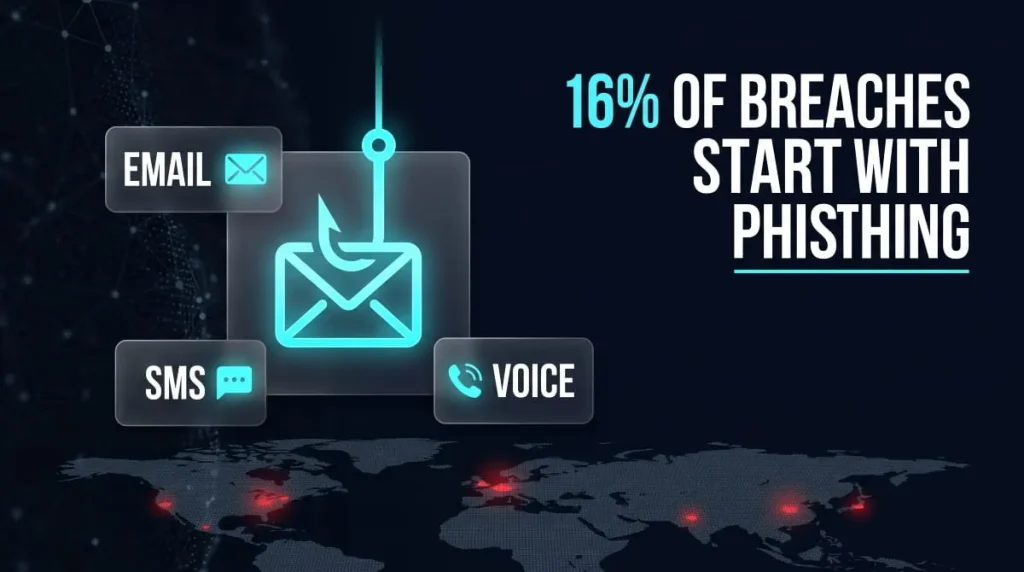
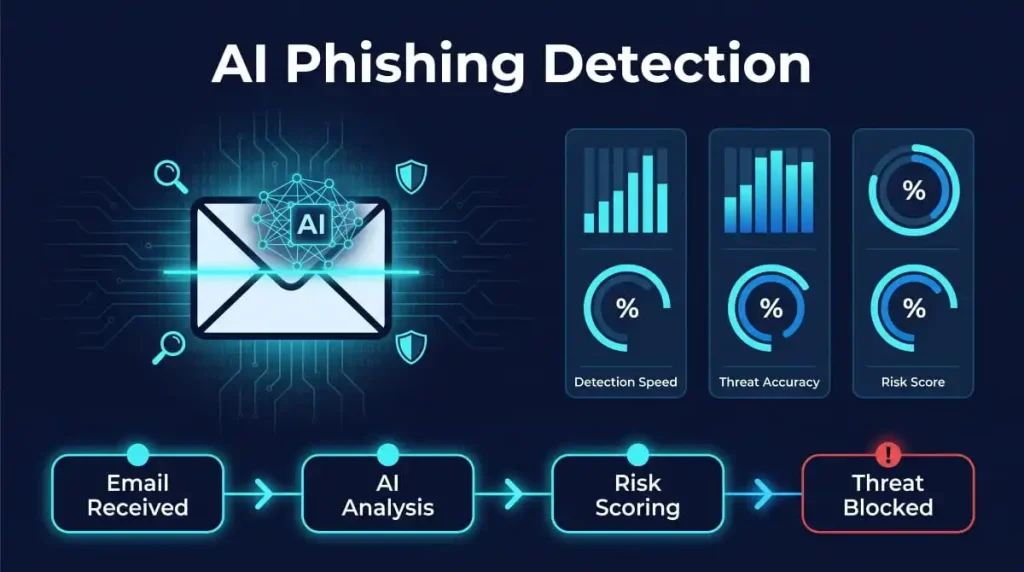
Phishing is the email-based variant. A fraudulent message impersonates a bank, government portal, e-commerce platform, or employer and directs the recipient to a fake website designed to harvest login credentials or payment details. The sophistication has increased dramatically; modern phishing emails are grammatically polished, visually convincing, and often personalized using data harvested from prior breaches.
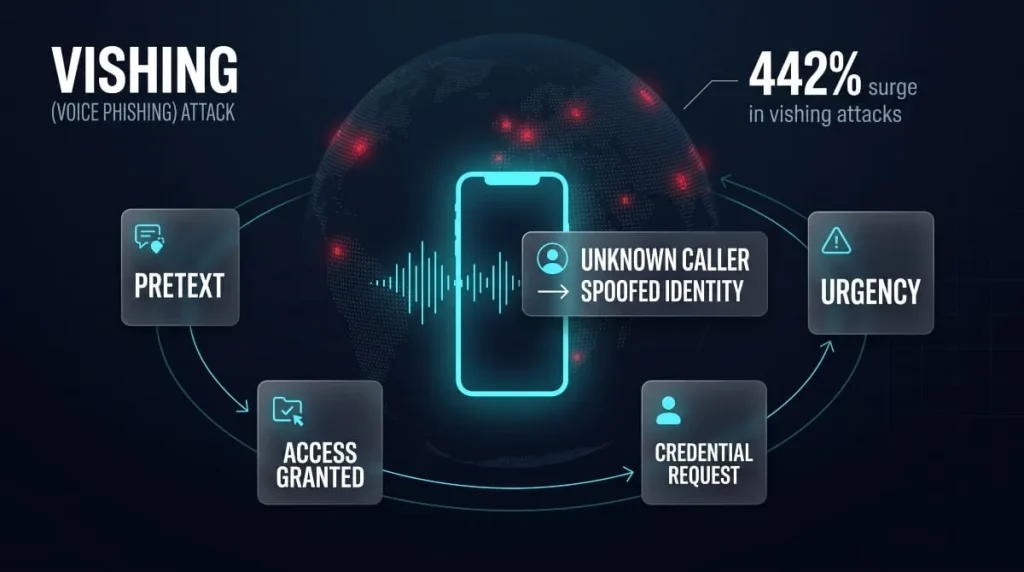
Vishing (voice phishing) moves the attack to phone calls. Fraudsters impersonate bank customer service representatives, TRAI officials, or government agencies. The script is practiced, the urgency is manufactured, and the target, often elderly or less digitally literate, is walked through, handing over OTPs or remote access to their devices.
Smishing (SMS phishing) exploits the trust most Indians still place in text messages. A link embedded in what appears to be a bank alert, delivery notification, or government scheme message redirects users to credential-harvesting pages or silently installs malware when clicked.
What makes these attacks particularly effective in India is the combination of a large population of relatively new internet users, high trust in official-sounding communications, and the rapid proliferation of UPI-linked bank accounts that create a direct path from deception to financial loss.
Cyberstalking & Online Harassment
India’s cybercrime data has consistently reflected a troubling volume of cases involving cyberstalking, online harassment, and image-based abuse, and consistent underreporting means the real numbers are considerably higher than what reaches police stations.
Cyberstalking, as defined under Section 354D of the IPC, covers repeated attempts to contact a person online despite clear disinterest, as well as monitoring someone’s internet activity to foster fear. In practice, cases range from relentless social media messaging by former partners to coordinated harassment campaigns against public figures, journalists, and activists.
Non-consensual intimate image sharing, colloquially known as “revenge porn”, is addressed under Section 66E of the IT Act and increasingly under the DPDP Act, but enforcement remains inconsistent. Young women and female professionals are disproportionately targeted, and the psychological toll frequently exceeds what any legal proceeding can adequately address.
Online harassment in India also takes organized forms: hate campaigns, doxxing (publishing someone’s private information publicly), and impersonation accounts designed to damage reputation. Social media platforms are the primary arena, and their delayed response mechanisms often allow harm to spread far before content is removed.
Ransomware & Malware Attacks
While financial fraud targets individuals, ransomware and malware attacks tend to target organizations, and the consequences scale accordingly. Hospitals, municipal corporations, logistics companies, and financial institutions have all been hit by ransomware attacks that encrypted critical data and demanded payment for its release.
CERT-In reported a significant increase in ransomware incidents against Indian critical infrastructure between 2022 and 2024. The 2022 ransomware attack on the All India Institute of Medical Sciences (AIIMS) in Delhi remains the most high-profile example. It paralyzed patient care systems for weeks, affecting millions of records and exposing the fragility of cybersecurity infrastructure in essential services.
Malware, a broader category that includes spyware, trojans, keyloggers, and infostealers, is often the precursor to larger attacks. Infostealer malware specifically is designed to silently extract saved passwords, browser cookies, and financial credentials from infected devices. These logs are then sold on dark web forums, feeding the same data pipeline that enables downstream identity theft and financial fraud.
For Indian businesses, particularly SMEs that lack dedicated security teams, malware infections frequently go undetected for months, giving attackers extended dwell time to map internal systems, escalate privileges, and exfiltrate sensitive data before anyone notices.
Dark Web-Related Crimes
The dark web serves as the backend infrastructure for a significant portion of India’s cybercrime ecosystem. It’s where stolen data is sold, fraud toolkits are distributed, and criminal networks coordinate at scale, largely invisible to conventional law enforcement and inaccessible through standard browsers.
Indian data appears on dark web marketplaces with disturbing regularity. Breach databases containing Aadhaar-linked records, leaked banking credentials, corporate email archives, and medical records have all been documented in dark web listings targeting Indian organizations and individuals. In many cases, the affected party has no idea their data is being traded because the original breach occurred years earlier or because the organization that held their data never publicly disclosed the incident.
Dark web forums also serve as distribution channels for malware-as-a-service, phishing kits tailored to mimic Indian banking portals, and tutorials on executing UPI fraud and SIM-swap attacks at scale. The barrier to entry for would-be cyber criminals has dropped sharply as ready-made attack infrastructure becomes commoditized and commercially available.
For individuals and organizations concerned about their exposure, proactive dark web monitoring and scanning for leaked credentials, email addresses, or corporate data are now recognized as best practices rather than optional extras. Waiting for visible damage before checking is, increasingly, too late.
Cyber Crime Statistics in India (2024–2026)
Numbers have a way of making abstract threats concrete. India’s cybercrime data doesn’t just describe a problem; it maps the scale of a crisis that has been accelerating year over year, outpacing both law enforcement capacity and public awareness. Here is what the latest available data actually shows.

How Many Cyber Crimes Are Reported Per Day in India?
In 2023, the National Cyber Crime Reporting Portal (NCRB) recorded over 1.5 million complaints, translating to roughly 4,200 per day. That figure represents reported cases only. Cybercrime in India is widely acknowledged to be severely underreported, with a large proportion of victims either unaware of how to file a complaint, doubtful that anything will come of it, or simply too embarrassed to report fraud they feel they should have avoided.
The Ministry of Home Affairs data for 2024 indicates the trajectory has not slowed. Complaint volumes through the 1930 helpline and the national portal continued to rise in the first three quarters of 2024, with financial fraud complaints constituting the overwhelming majority of incoming reports.
To put the daily figure in perspective: by the time you finish reading this section, dozens of Indians will have filed, or chosen not to file, a cybercrime complaint.
State-Wise Data: Which State Has the Highest Cyber Crime Rate?
India’s cybercrime burden is not evenly distributed. According to NCRB data, Telangana, Uttar Pradesh, Karnataka, and Rajasthan consistently rank among the states with the highest absolute volumes of reported cybercrime cases.
Telangana, and Hyderabad specifically, has recorded some of the highest cybercrime complaint rates among Indian cities, driven by its large tech workforce, high digital payment adoption, and significant concentration of corporate targets. Karnataka, home to Bengaluru’s tech ecosystem, follows a similar pattern: high digital activity directly correlates with greater exposure.
Rajasthan warrants separate attention for a different reason. The Mewat region, spanning parts of Rajasthan and Haryana, has become synonymous with what investigators call “cyber crime hotspots” or “jamtara-style” fraud networks: loosely organized but highly effective phone-based scam operations targeting victims across the country. The term “Jamtara” itself, borrowed from the Jharkhand district made famous by the Netflix series, has entered common usage as shorthand for organized rural cyber fraud infrastructure.
Notably, higher reported rates in more urbanized states also reflect greater awareness of reporting mechanisms, meaning the gap between actual incidence and reported cases may be even wider in states with lower digital literacy.
Financial Losses from Cyber Crime in India
The financial damage from cybercrime in India has reached a scale that demands serious policy attention. According to the Indian Cyber Crime Coordination Centre (I4C), Indians lost approximately ₹11,333 crore to cyber fraud in the first nine months of 2024 alone, a figure that dwarfs previous annual totals and signals a rapid escalation.
Investment scams and trading fraud accounted for the single largest share of financial losses, followed by digital arrest scams and loan app-related fraud. The average loss per victim in investment fraud cases significantly exceeds that of other fraud categories, as victims are often manipulated over weeks or months into transferring increasingly large sums before the deception becomes apparent.
For context, the financial losses from cybercrime in India now rival the GDP of several smaller nations. Recovery rates remain low; once money moves through layered accounts, cryptocurrency wallets, or cross-border transfers, tracing and reclaiming it is operationally difficult, even when the case is eventually investigated.
Key Trends from the Latest NCRB Cyber Crime Report
The National Crime Records Bureau’s data provides the most authoritative longitudinal view of cybercrime in India, and several trends from the latest reporting period stand out.
Complaint volume is growing faster than case registration. A significant gap exists between the number of complaints received and the number of FIRs filed, reflecting both resource constraints at state cybercrime cells and procedural hurdles that discourage formal case registration.
The demographic profile of victims is broadening. Earlier data skewed toward urban, educated, and financially active victims. More recent reports show increasing victimization among senior citizens, rural populations, and first-generation smartphone users, groups with less familiarity with digital fraud patterns and fewer support systems when targeted.
Cyber crimes against women continue to be undercounted. Offences involving cyberstalking, image-based abuse, and online harassment remain among the most underreported categories, partly due to social stigma and partly due to the perception that digital harassment is less “serious” than physical crime, a perception that law enforcement and advocacy groups are actively working to correct.
Finally, the data consistently point to one structural reality: the gap between cybercrime sophistication and institutional response capacity is widening. More attacks, more complex attack chains, more organized criminal networks, against a backdrop of cyber cells that are understaffed, underequipped, and still developing the technical expertise needed to investigate modern cyber offences at scale.
Famous & Recent Cyber Crime Cases in India
Case studies do what statistics cannot. They show the human cost of cybercrime, the decisions made, the vulnerabilities exploited, and the damage that follows. India has produced some of the most significant cybercrime cases in Asia over the past two decades, ranging from coordinated dark web data operations to large-scale financial fraud that dismantled life savings overnight.

Biggest Cyber Crime Cases in India (With Case Studies)
The AIIMS Delhi Ransomware Attack (2022)
In November 2022, the All India Institute of Medical Sciences in New Delhi suffered one of the most damaging cyber attacks ever recorded against Indian public infrastructure. A ransomware group, believed to have Chinese state-linked affiliations (though never formally attributed), encrypted the hospital’s servers, taking down its patient management system, appointment scheduling, billing infrastructure, and laboratory result systems simultaneously.
For nearly two weeks, one of India’s largest and most critical hospitals was forced to operate on paper. An estimated 1.3 terabytes of data, including patient records, research data, and staff credentials, may have been compromised. The attackers demanded a ransom reportedly valued at ₹200 crore in cryptocurrency. The Indian government did not confirm whether any payment was made.
The attack exposed a systemic vulnerability: institutions that hold some of the most sensitive personal data in the country were operating on IT infrastructure with minimal cybersecurity investment.
The Jamtara Phishing Network
Jamtara, a district in Jharkhand, became so synonymous with organized phone fraud that it entered the national vocabulary and eventually became the subject of a Netflix series. Over the course of multiple police investigations spanning 2015 to 2022, authorities dismantled what was effectively a cottage industry of vishing operations, with hundreds of individuals, many in their early twenties with minimal formal education, running coordinated impersonation fraud schemes from rural locations.
Victims across India were called by individuals impersonating bank representatives, prompted to share OTPs, and systematically drained of savings. What made the Jamtara network significant beyond its scale was its organizational structure: role division, geographic distribution, money mule networks, and rapid SIM cycling, which made tracing individual perpetrators genuinely difficult.
The Cosmos Bank Cyber Heist (2018)
In August 2018, Cosmos Cooperative Bank in Pune lost approximately ₹94 crore in one of the most technically sophisticated banking cyber attacks India had seen. Attackers, linked by investigators to the North Korea-affiliated Lazarus Group, compromised the bank’s ATM server and simultaneously conducted over 12,000 transactions across 28 countries using cloned debit cards. The operation ran over two weekends, exploiting gaps in real-time monitoring. A separate SWIFT-based transfer of ₹13.92 crore to a Hong Kong-based entity was made through compromised banking credentials.
The case demonstrated that Indian financial infrastructure was being targeted by nation-state-level threat actors, not just opportunistic domestic fraudsters.
The BPO Data Theft Case (2005), India’s First Major Cyber Crime Conviction
Earlier but foundational: in 2005, a Pune-based call centre employee, Nadeem Kashmiri, sold customer account data belonging to Citibank clients to a UK-based fraudster. The case resulted in one of India’s first significant cybercrime convictions under the IT Act. It marked an early recognition that insider threats in India’s booming outsourcing sector represented a genuine, underappreciated risk.
Recent Cyber Crime Cases in India (2024–2026)

The ₹2,000 Crore “Digital Arrest” Fraud Network (2024)
In 2024, the Indian Cyber Crime Coordination Centre and multiple state police forces began dismantling a sprawling network responsible for “digital arrest” scams, a fraud category that Prime Minister Narendra Modi addressed in his Mann Ki Baat broadcast in October 2024, marking the first time the scheme had received national-level political attention.
Victims, frequently senior citizens and retired professionals, were contacted by individuals posing as officials from the CBI, Narcotics Control Bureau, or TRAI. They were placed under fabricated “digital arrest,” held on extended video calls for hours or days, and psychologically manipulated into transferring large sums to avoid non-existent criminal proceedings. Multiple arrests were made across Delhi, Uttar Pradesh, and Gujarat, with some operations traced to overseas criminal networks operating from Southeast Asia.
The Mahadev Online Betting App Case (2023–2024)
The Mahadev Book case implicated not only cybercriminals but also politicians, celebrities, and law enforcement officials across multiple Indian states. The operation, run primarily from Dubai, managed a network of illegal online betting platforms that processed thousands of crores in transactions through layers of shell accounts, cryptocurrency, and hawala networks. Enforcement Directorate investigations in 2023 and 2024 resulted in multiple arrests and asset seizures, while the case exposed how cyber-enabled financial crime in India now operates with significant institutional protection.
The CoWIN Data Leak (2023)
In June 2023, a Telegram bot began offering public access to what appeared to be personal data, names, Aadhaar numbers, phone numbers, and vaccination records of Indian citizens drawn from the CoWIN vaccination portal. The government disputed the scale of the breach, but the episode raised fundamental questions about the security architecture protecting India’s largest biometric and health data infrastructure. The incident was emblematic of a broader pattern: massive centralized data collection combined with inadequate security controls creates high-value targets with catastrophic breach potential.
Major Financial Cyber Crime Cases
Financial cybercrime in India has produced cases on a scale that places the country among the most severely affected globally. Beyond the headline cases above, several patterns recur across major financial fraud investigations.
The stock trading and investment scam ecosystem that emerged aggressively between 2022 and 2025 deserves particular attention. Organized networks, many operated from Myanmar, Cambodia, and Dubai, used Meta advertisements, WhatsApp groups, and fake trading apps to recruit victims into “investment opportunities” promising extraordinary returns. Victims were shown fabricated profits on fake platforms, encouraged to invest progressively larger sums, and ultimately blocked from withdrawing anything when they attempted to exit. The I4C estimates this category alone accounted for losses exceeding ₹7,000 crore in 2024.
Loan app fraud, where predatory digital lending applications accessed contacts and private photos from victims’ phones and used them as blackmail leverage when borrowers couldn’t repay, led to multiple suicides across Telangana, Karnataka, and Maharashtra between 2021 and 2023, prompting RBI intervention and eventually leading to criminal cases against Chinese-linked app operators.
What These Cases Reveal About India’s Cyber Threat Landscape
Taken together, these cases are not isolated incidents. They are a diagnostic.
They reveal that India’s cybercrime problem is both domestic and international. A nation-state group executed the Cosmos Bank heist. The digital arrest networks are run from overseas. The investment scam infrastructure is based in Southeast Asia. Yet the victims are overwhelmingly Indian, and the institutional response is still primarily calibrated for domestic, individual perpetrators.
They reveal that data is the upstream vulnerability. Nearly every major financial fraud case, whether it involves impersonation, targeted phishing, or identity theft, begins with access to personal data. The leaked CoWIN records, the stolen banking credentials, the dark web databases of Indian user information: these are not side effects of cybercrime. They are the raw material it runs on.
And they reveal that the gap between attack sophistication and defensive readiness is structural, not incidental. Until organizations, public and private, treat cybersecurity investment as essential infrastructure rather than optional overhead, and until individuals understand that their data has real market value to criminal networks, the case list will keep growing.
Also Read: IoT Hacking Statistics 2026 | Global Trends and Key Insights
How to Report Cyber Crime in India
Knowing you’ve been targeted is one thing. Knowing what to do next is another. Most cybercrime victims in India lose critical time in the hours after an attack, not because they’re inactive, but because they don’t know where to go, what to say, or whether reporting will accomplish anything. This section removes that uncertainty.

Step-by-Step: Filing a Complaint on the National Cyber Crime Reporting Portal
The National Cyber Crime Reporting Portal, accessible at cybercrime.gov.in, is the Government of India’s centralized platform for reporting all categories of cyber crime. It is operational 24/7, requires no in-person visit, and accepts complaints from anywhere in the country.
Here is how the process works:
Step 1: Visit cybercrime.gov.in. Navigate to the official portal. Avoid third-party sites that claim to offer complaint-filing services; the government portal is the only legitimate entry point.
Step 2: Select your complaint category. The portal separates complaints into two primary tracks: offences related to women and children (which receive priority handling) and all other cyber crimes. Select the appropriate category before proceeding.
Step 3: Register or continue as a guest. You can file a report as a guest without creating an account, though registering allows you to track the status of your complaint. Enter your mobile number to receive an OTP for verification.
Step 4: Fill in the incident details. Provide as much information as possible: the date and time of the incident, the platform or medium through which the attack occurred, any phone numbers, email addresses, URLs, or account details associated with the perpetrator, and a clear description of what happened. Attach screenshots, transaction records, or any supporting evidence you have.
Step 5: Submit and record your complaint number. Once submitted, you’ll receive an acknowledgment number. Save it. You’ll need it to follow up on the status of your complaint with local authorities.
One important note: the portal routes your complaint to the relevant state cybercrime cell for investigation. Filing online does not replace the option of visiting your local cybercrime police station in person, particularly for serious financial fraud cases where immediate account freezing may be necessary.
India Cyber Crime Helpline, Call 1930
For financial cyber fraud specifically, 1930 is the number to call, and speed matters enormously.
The 1930 helpline, operated by the Ministry of Home Affairs, is directly integrated with major banks and payment platforms through the Citizen Financial Cyber Fraud Reporting and Management System. When you report financial fraud promptly, authorities can flag the recipient’s account and place a hold on the funds before they are further transferred or withdrawn.
The window is narrow. Cyber fraudsters move stolen funds rapidly through chains of mule accounts, UPI handles, and cryptocurrency conversions. Calling 1930 within the first hour of discovering a fraud gives investigators the best chance of freezing the funds before they disappear beyond recovery.
When you call, have the following ready: your bank account details, the transaction ID or UTR number for the fraudulent transfer, the recipient’s phone number or UPI ID, if known, and a brief description of how the fraud occurred. The helpline operates across all states and union territories and is available in multiple regional languages.
How to Report Cyber Crime Anonymously
Not every victim is willing, or safe, to file a complaint under their own name. Concerns about retaliation, social stigma, or simply a desire for privacy lead many people to ask whether anonymous reporting is possible.
The answer is yes, with qualifications.
The National Cyber Crime Reporting Portal allows complaints to be filed without full identity disclosure in certain categories, particularly for offences related to child sexual abuse material (CSAM) and other sensitive content. For these categories, anonymous reporting is explicitly supported and encouraged.
For financial fraud and other cyber crimes, full anonymous reporting is more limited, since investigators typically need contact information to follow up and build a prosecutable case. However, you can report information about a cybercrime incident, including details of fraudulent numbers, websites, or accounts, without necessarily identifying yourself as a victim, which can still assist in pattern-based investigations.
India’s Cyber Dost initiative on social media also accepts tip-offs and reports of suspicious cyber activity. Additionally, CERT-In accepts incident reports at incident@cert-in.org.in, which is particularly relevant for organizations reporting infrastructure attacks rather than individual fraud.
What Happens After You File a Complaint?
Filing a complaint is the beginning of a process, not its end. Understanding what follows helps manage expectations.
Once your complaint is submitted on the national portal, it is reviewed and forwarded to the cybercrime cell of the relevant state or district. A local officer is assigned to assess whether the complaint meets the threshold for formal case registration, that is, whether an FIR will be filed under the IT Act, the IPC, or both.
If an FIR is registered, the case enters the formal investigation pipeline. Investigators may contact you for additional information, request access to your device, or ask for bank statements and digital records. For cases involving substantial financial fraud, the Economic Offences Wing or the Enforcement Directorate may become involved, depending on the scale and nature of the crime.
The honest reality is that investigation timelines are long, and conviction rates for cybercrime remain low relative to the volume of cases. Resource constraints at state cyber cells, jurisdictional complexity in cases involving out-of-state or international perpetrators, and the technical demands of digital forensics all contribute to delays. This does not mean filing is pointless; it contributes to statistical tracking, supports pattern recognition across multiple complaints, and creates the legal record necessary for any eventual prosecution or insurance claim.
Can You Get a Refund After Cyber Fraud in India?
This is the question most victims want answered first, and the honest answer is: sometimes, but only if you act fast.
The 1930 helpline’s account-freezing mechanism is the primary route to financial recovery. If a fraudulent transaction is reported promptly and the funds are still in an accessible account, banks can place a hold and, in some cases, reverse the transaction to the victim. The I4C has reported that this mechanism has helped recover several hundred crore rupees for victims since its expansion. Still, the success rate drops sharply the longer the delay between the fraud and the report.
Beyond the immediate freeze mechanism, victims can pursue refunds through their bank’s fraud grievance process. Under RBI guidelines, if a fraudulent transaction occurs due to the bank’s negligence, compromised banking infrastructure, or unauthorized access without the customer’s fault, the bank bears liability for the loss. However, if the fraud occurred because the customer voluntarily shared credentials or OTPs (even under duress), the liability calculation becomes more complex.
For larger cases, civil suits and criminal prosecution can eventually result in asset recovery, but these routes are slow and uncertain.
The single most important variable in financial recovery from cyber fraud is time. The faster you call 1930 and file on the portal, the better your chances.
Has your data already been exposed without your knowledge?
Most cyber fraud starts long before the attack reaches you, with your email address, phone number, or credentials circulating on the dark web. Use DeXpose’s Free Dark Web Report to instantly check whether your personal or organizational data has been compromised in known breaches and dark web sources. It takes seconds, and knowing early is your only advantage.
How to Protect Yourself from Cybercrime in India
Reporting cybercrime matters. Understanding the law matters. But neither does it do anything for you after the damage is done. Prevention is the only intervention that actually keeps money in your account, keeps your identity intact, and keeps your private data from circulating on markets you’ll never see.

The good news is that most successful cyber attacks in India don’t exploit exotic technical vulnerabilities. They exploit predictable human behaviour, urgency, trust, inattention, and the widespread assumption that “it won’t happen to me.” Closing those gaps doesn’t require technical expertise. It requires awareness and a small number of consistent habits.
Prevention Tips for Individuals & Students
Never share OTPs, PINs, or passwords with anyone, under any circumstances. No bank, government agency, telecom provider, or legitimate business will ever call you and ask for a one-time password. This is the single most exploited social engineering vector in India. The moment someone on a call asks for an OTP, the call is fraudulent. End it.
Treat urgency as a red flag, not a prompt. Digital arrest scams, KYC expiry threats, and fake legal notices all share one design feature: they manufacture a deadline to prevent rational thinking. Any communication, call, SMS, email, or WhatsApp message that demands immediate action involving money or credentials should be treated with extreme suspicion. Legitimate institutions give you time to verify.
Use strong, unique passwords and enable two-factor authentication. Password reuse is one of the most common reasons a single breach cascades into multiple account compromises. A password manager eliminates the friction of maintaining unique credentials across platforms. Two-factor authentication, particularly app-based authentication rather than SMS-based, adds a layer of protection that stops most credential-stuffing attacks cold.
Be cautious about what you share publicly online. Social media oversharing feeds targeted fraud. Your date of birth, phone number, employer, home city, and family details, all commonly visible on public profiles, are exactly the data points fraudsters use to make impersonation calls more convincing. Tighten your privacy settings and be deliberate about what you make publicly accessible.
For students specifically, the risk profile includes fake scholarship portals, part-time job scams run through Telegram and Instagram, and phishing links disguised as university notifications or exam result pages. Verify every URL before entering credentials, and access institutional portals only through official bookmarked links, never through search results or links received in messages.
Verify before you transfer. UPI fraud in India frequently involves social engineering that creates a plausible reason to send money urgently. Before any transfer, especially to a new contact, call the recipient independently to confirm. Scanning a QR code to receive money is physically impossible; if someone asks you to scan a QR code to receive a payment, they are attempting to extract money from you, not send it.
What to Do If You’re a Victim of Cyber Crime
The hours immediately following a cyber attack are the most consequential. What you do, and don’t do, in that window has a direct bearing on how much damage gets contained.
Act on financial fraud within the hour. Call 1930 immediately. The national helpline is directly connected to bank fraud response systems and can initiate account freezing before money is transferred further. Every hour of delay significantly reduces recovery probability.
Don’t delete anything. The instinct after being defrauded or harassed online is often to clear the evidence, block the number, delete the conversation, and close the account. Resist it. Screenshots of messages, transaction records, email headers, URLs visited, and any communication with the perpetrator are evidence. Preserve everything before taking any other action.
Change your credentials immediately across any accounts that may have been compromised, and prioritize email accounts, since email access allows an attacker to reset passwords across every linked platform. If you use the same password elsewhere, change those too.
File a complaint on cybercrime.gov.in with as much detail as you can provide. Even if you’re uncertain whether a formal investigation will follow, the complaint creates a legal record, contributes to pattern tracking, and is a prerequisite for any insurance claim or bank dispute process.
Contact your bank directly if financial accounts are involved. Report the fraud through the bank’s official customer service channel, not a number found through a search engine, and request that the disputed transaction be flagged for review.
Finally, if you are experiencing cyberstalking, image-based abuse, or online harassment, contact the National Commission for Women (NCW) cyber helpline or reach out to organizations like iCall or the Cyber Peace Foundation, which offer both practical and psychological support to victims navigating the aftermath of online abuse.
How Dark Web Monitoring Can Detect Your Exposed Data Early
Here is a reality most people don’t consider: by the time a cyber attack reaches you, your data has often been available to criminals for months, sometimes years. Breaches don’t announce themselves. Organizations frequently discover they were compromised long after the fact, and individuals rarely find out at all unless they’re actively looking.
The dark web is where stolen data lives after a breach. Credentials harvested from leaked databases, email addresses extracted from compromised platforms, phone numbers tied to financial accounts, corporate login details, all of it gets packaged, sold, and resold on dark web marketplaces and forums that operate completely outside public visibility.
Dark web monitoring works by continuously scanning these sources, breach databases, paste sites, dark web forums, criminal marketplaces, infostealer malware logs, and alerting you when your data appears. For individuals, this typically means checking whether your email address, phone number, or credentials have surfaced in known breach datasets. For organizations, it extends to monitoring for leaked employee credentials, exposed customer data, compromised executive accounts, and brand impersonation activity.
The value of this is not academic. When you know your credentials have been exposed, you can rotate passwords before an attacker uses them. When you know your email is in a breach database, you can anticipate targeted phishing attempts and respond with heightened vigilance. When an organization detects its data on a dark web forum before a criminal acts on it, there is still a window to contain the damage, notify affected users, close the access point, and coordinate with authorities before the breach becomes a headline.
Waiting for visible damage is a losing strategy. By the time fraud appears on your bank statement or your accounts start getting locked out, the upstream exposure has already been exploited. Early detection through dark web monitoring is the closest thing available to a genuine early warning system. For both individuals and businesses operating in India’s current threat environment, it is no longer optional infrastructure.
Find out if your data is already on the dark web.
DeXpose scans dark web markets, breach databases, and malware logs to surface your exposure before criminals act on it. Run a free dark web report in seconds, no signup required, or use the Email Data Breach Scan to check whether your email address or your organization’s data has already been compromised.
Conclusion
Cybercrime in India is not a distant threat managed by governments and corporations. It is an everyday reality that reaches individuals, students, small businesses, and large institutions with equal indifference.
Understanding the law gives you context. The statistics give you scale. The case studies give you pattern recognition. The reporting process gives you recourse. And the prevention habits give you a fighting chance before an attack completes.
But awareness alone has a ceiling. Most cyber attacks begin with data that’s already exposed, credentials, email addresses, and personal records circulating on the dark web long before any fraud reaches your door.
That’s where early detection changes the equation.
Run a free dark web scan with DeXpose and find out what’s already out there, before someone else acts on it.
Frequently Asked Questions (FAQ’s)
What is the punishment for cybercrime in India?
Punishment for cybercrime in India varies by offence. Under Section 66 of the IT Act, the general penalty is up to three years in prison, a fine of up to ₹5 lakh, or both. More serious offences, such as cyber terrorism (Section 66F), can carry life imprisonment.
How do I report cybercrime online in India?
Visit the National Cyber Crime Reporting Portal at cybercrime.gov.in to file a complaint online 24/7. Select your complaint category, fill in the incident details, attach any supporting evidence, and submit to receive an acknowledgment number for tracking.
Which state has the highest cybercrime rate in India?
Telangana, Uttar Pradesh, and Karnataka consistently report the highest volumes of cybercrime cases in India, according to NCRB data. Rajasthan’s Mewat region is also widely recognized as a major hub for organized phone-based fraud.
What is the 1930 helpline for cybercrime?
1930 is India’s national cybercrime helpline, operated by the Ministry of Home Affairs, specifically for reporting financial fraud. Calling 1930 immediately after a fraud triggers a bank account-freezing mechanism that can stop stolen funds from being transferred further.
Is cyberstalking a crime in India?
Yes. Cyberstalking is a criminal offence under Section 354D of the Indian Penal Code, punishable by up to 3 years’ imprisonment on a first conviction. It covers repeated online contact against a person’s will and monitoring of internet activity to instill fear.
How many cybercrimes happen per day in India?
According to 2023 data from the National Cyber Crime Reporting Portal, India receives approximately 4,200 cybercrime complaints per day. This figure reflects only reported cases; the actual daily incidence is significantly higher due to widespread underreporting.
Does the cybercrime department refund money in India?
A refund is possible if the fraud is reported quickly enough. Calling the 1930 helpline within the first hour of a fraudulent transaction can trigger an account freeze and potential reversal. Delays significantly reduce recovery chances, as funds are rapidly moved through layered accounts.
What is the Indian Cyber Crime Coordination Centre?
The Indian Cyber Crime Coordination Centre (I4C) is a government body under the Ministry of Home Affairs, established to coordinate the national response to cybercrime. It oversees the 1930 helpline, the National Cyber Crime Reporting Portal, and intelligence sharing between state cyber cells and central agencies.