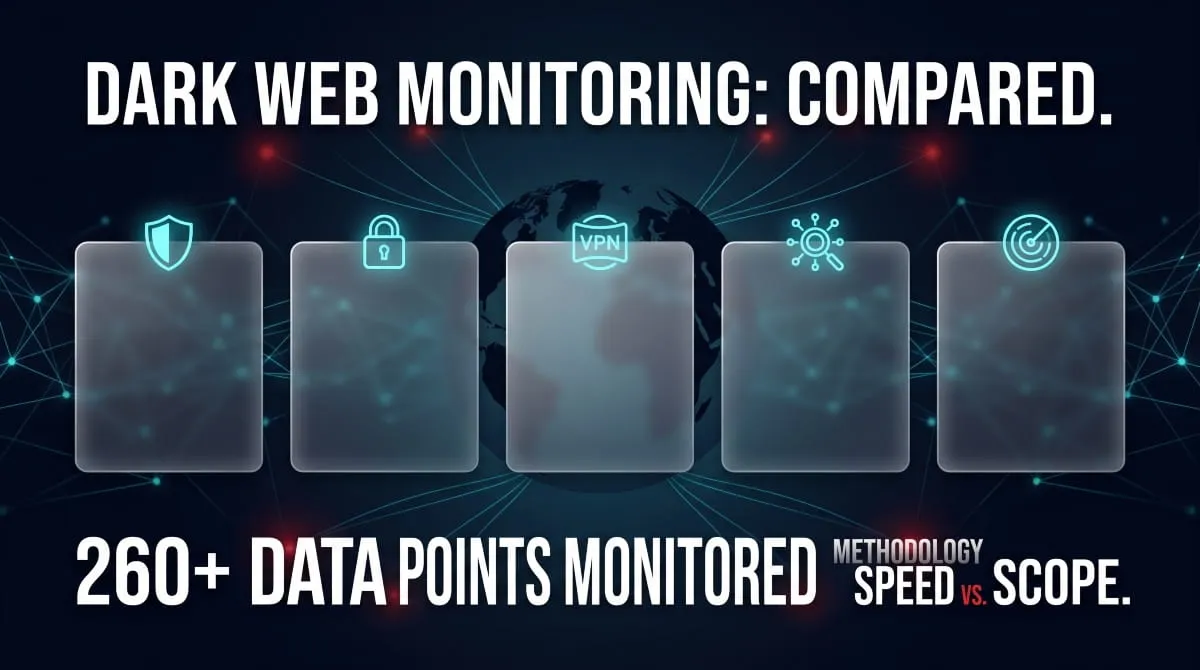
Norton, Aura, and LifeLock scan the dark web for an individual’s personal data, SSNs, passwords, and bank details. NordVPN’s dark web monitor does a lighter version of the same thing as a bundled VPN feature. KELA does something different entirely: enterprise-grade threat intelligence built for security teams, not consumers. Which one is “best” depends entirely on whether you’re protecting yourself or protecting an organization.
Consumer Identity Protection vs. Enterprise Threat Intelligence
The first thing to understand before comparing any of these tools is that they’re not really competing in the same category. Norton, Aura, and LifeLock are identity theft protection subscriptions aimed at individuals and families. They check whether your personal information specifically has turned up in a breach or dark web listing, then help you respond with credit monitoring and restoration support. KELA sits at the opposite end: it’s a threat intelligence platform built for security operations teams tracking an organization’s exposure across criminal marketplaces, forums, and infostealer logs at scale. Comparing “Is Aura better than KELA?” is a bit like comparing a home security camera to an enterprise surveillance network; they’re solving different problems for different customers.
Aura’s Dark Web Scanner
Aura monitors a notably wide range of personal data points; independent testing puts the figure at over 260 pieces of PII, compared to roughly 60 for LifeLock. In head-to-head testing by SecurityHero, Aura surfaced far more dark web alerts than LifeLock over the same monitoring period, and a separate mystery-shopper study by ath Power Consulting found Aura delivering fraud alerts in around three minutes versus over nine hours for Norton LifeLock. For an individual who wants one subscription that bundles dark web monitoring with a VPN, antivirus, and password manager, Aura is built for exactly that use case.
Norton and LifeLock Dark Web Monitoring
LifeLock (Norton’s identity protection product) takes a tiered approach: the entry-level plan monitors only one credit bureau and offers narrower dark web coverage. At the same time, the higher Ultimate Plus tier adds three-bureau monitoring, social media alerts, and higher identity theft insurance limits (up to $3 million per adult on top plans, versus $1 million with Aura). That tiering is the main trade-off: LifeLock can match or exceed Aura’s coverage, but usually only at a meaningfully higher price point, and its base plan leaves real gaps that some users won’t notice until a fraud attempt slips through an unmonitored bureau.
Is NordVPN Good for Dark Web Monitoring?
NordVPN’s dark web monitor is a supplementary feature bundled into its VPN subscription, not a dedicated identity protection product. It checks whether your email address has appeared in known breach databases and sends an alert if it has. That makes it useful as a basic tripwire if you’re already paying for the VPN. Still, it doesn’t offer the credit monitoring, insurance, or restoration support that dedicated services like Aura or LifeLock provide. If dark web monitoring is your primary goal rather than a bonus feature, a purpose-built identity protection service will cover more ground.
KELA and Enterprise Threat Intelligence
KELA operates in a different market than any of the consumer tools above. Its cyber threat intelligence platform is built for security teams that need visibility into criminal forums, initial access broker listings, and infostealer log marketplaces, and that track threats against an organization’s infrastructure and third-party vendors rather than a single person’s SSN. This is the category DeXpose competes in directly: not “did my personal email leak,” but “is our company, our brand, or our supply chain being targeted right now.”
Where DeXpose Fits
DeXpose is built for organizations, not individuals, which is the dividing line that matters most when picking a tool. Dark Web Monitoring continuously tracks an organization’s exposure across breach dumps and criminal marketplaces; Attack Surface Mapping provides visibility into exposed assets before attackers find them; Brand Protection monitors for phishing and impersonation attempts; and Supply Chain Monitoring extends that same visibility to vendors whose breaches can indirectly expose you. None of the consumer tools above are built to answer those questions because they’re not designed for that customer.
Which One Should You Actually Use?
If you’re protecting yourself or your family, Aura, LifeLock, or NordVPN’s monitoring feature is a reasonable starting point, with the choice between them coming down to budget and how much you value bundled extras like a VPN or antivirus. If you’re responsible for protecting a company, its infrastructure, its brand, its vendors, that’s a fundamentally different job, and it’s the one DeXpose is built for. Try the Free Darkweb Report to see what’s already exposed before deciding what level of ongoing monitoring you need.
Frequently Asked Questions (FAQ’s)
Is NordVPN good for dark web monitoring?
It serves as a basic breach email alert included with the VPN subscription. Still, it’s not a dedicated identity protection service; it lacks the credit monitoring, insurance, and restoration support that services like Aura or LifeLock include.
Is Aura’s dark web scanner better than Norton’s?
Independent testing has generally found Aura faster to alert and broader in the personal data points it monitors. However, Norton LifeLock’s higher-tier plans offer larger identity theft insurance limits, which matter more to some users than alert speed alone.
Does KELA compete with DeXpose?
They operate in the same broad category, enterprise threat intelligence, rather than the consumer identity-protection space that Norton, Aura, and LifeLock serve.
Do businesses need a different dark web monitoring tool than individuals?
Yes. Consumer tools are built to track a single person’s exposed data. Organizations need monitoring built around company assets, brand impersonation, and third-party vendor risk, a different scope entirely.