
Social Engineering in Cyber Security | Types & Tactics
Social engineering in cyber security is the practice of manipulating people, rather than exploiting software or hardware flaws, into handing over confidential information, granting system access, or taking an action that compromises security. Instead of breaking through a firewall, an attacker convinces an employee to click a link, approve a login request, or share a password over the phone.
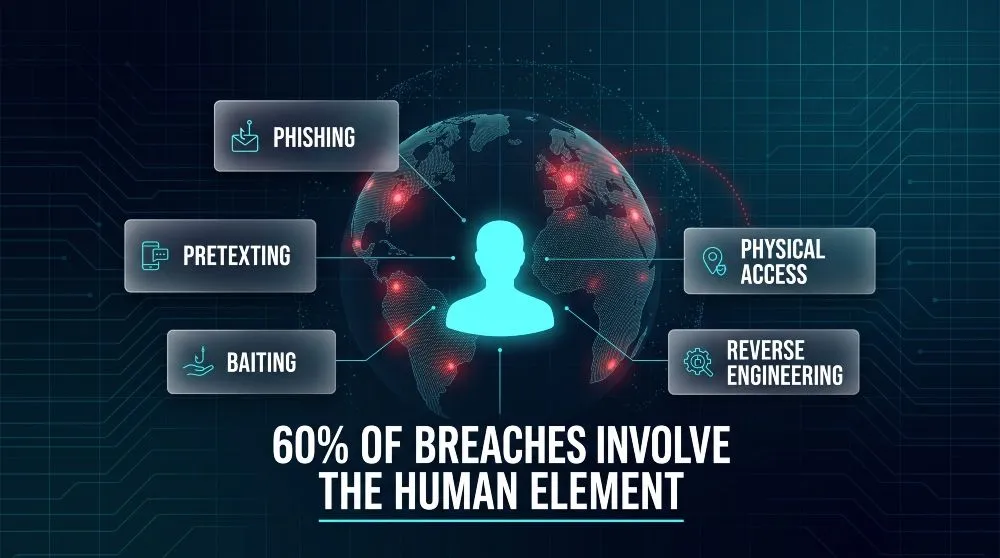
It’s less a hacking technique than a psychological one, and it’s remarkably effective: Verizon’s 2025 Data Breach Investigations Report found that the human element, errors, manipulation, or misuse, was a factor in roughly 60% of confirmed breaches. That makes social engineering one of the most consistently successful entry points into otherwise well-defended networks, which is why understanding how it works, and what it looks like in practice, matters as much for individuals as it does for security teams.
This guide breaks down exactly what social engineering means in a cyber security context, the types and tactics attackers rely on, how a typical attack unfolds, and real examples of it in action, along with how organizations test for and defend against it.
What Is Social Engineering in Cyber Security?
Social engineering in cyber security is the manipulation of human behavior, rather than software or hardware, to gain unauthorized access, information, or control over a system. It relies on deception, urgency, and false trust to get a person to do the work an attacker would otherwise need malware or a coding exploit to do.
Social Engineering Definition (NIST & Industry Standards)
Under NIST’s security and privacy framework, social engineering is described as an attempt to trick a person into revealing information or taking an action that can breach, compromise, or otherwise damage a system. Industry bodies define it the same way in practice: it covers any tactic, a phone call, an email, a fake login page, an in-person visit, designed to exploit trust, authority, or habit rather than a technical flaw. Phishing, pretexting, baiting, and impersonation all fall under this umbrella; they’re different delivery methods for the same underlying goal.
How It Differs From Technical Hacking
Technical hacking targets a weakness in code, configuration, or infrastructure, an unpatched server, a misconfigured firewall, a vulnerable API. Social engineering targets a person instead, treating human judgment as the exploitable surface. That distinction matters because it changes the defense: patching software stops technical attacks, but stopping social engineering requires changing how people recognize and respond to manipulation. It’s also why social engineering often works even against organizations with strong technical defenses, Verizon’s 2025 DBIR found phishing alone was the starting point in 16% of breaches, entirely bypassing perimeter security by going straight to the employee.
Why It’s Called the Human Element of Security
Security researchers use the phrase “human element” because social engineering succeeds by working through people, not around them, an employee who trusts a caller claiming to be IT support, or clicks a link that looks like it came from a colleague. This is why the same Verizon 2025 DBIR data found the human element factored into roughly 60% of confirmed breaches. It’s the reason social engineering is treated as a distinct risk category in cybersecurity frameworks, separate from malware or network intrusion, and why awareness and behavior are considered as critical to defense as firewalls and endpoint tools.
Types of Social Engineering Attacks
Social engineering in cyber security takes several distinct forms, each exploiting trust or urgency in a different way. Attackers typically choose their method based on the target, a mass audience, a specific executive, or physical access to a building, but all of them share the same goal: get a person to act against their own or their organization’s interest.
Phishing & Spear Phishing
Phishing is the most common form of social engineering: fraudulent emails, texts, or messages designed to look like they come from a trusted source, luring the recipient into clicking a malicious link or handing over credentials. Spear phishing is the targeted version, instead of blasting the same message to thousands of people, the attacker researches a specific individual and references real names, projects, or job details to make the message convincing. That personalization pays off: spear phishing messages trick recipients at a rate of roughly 39%, compared to about 9.4% for generic phishing campaigns, making it disproportionately effective despite being sent in far smaller volumes.
Pretexting
Pretexting is social engineering built around a fabricated scenario, or “pretext,” that gives the attacker a believable reason to ask for sensitive information. A common example is an attacker posing as an IT technician who calls an employee claiming there’s an urgent account issue and needs their login credentials to “fix” it. Unlike phishing, which usually relies on a single message, pretexting often unfolds as a conversation, with the attacker building credibility and answering follow-up questions to keep the target from getting suspicious.
Baiting
Baiting dangles something the target wants, a free download, a gift card, a USB drive labeled “Confidential Salary Data” left in a parking lot, to get them to take an action that compromises security. The bait can be physical or digital, but the mechanism is the same: curiosity or greed overrides caution, and the victim installs malware or enters credentials on a fake site without realizing they’ve been targeted. It’s one of the few social engineering tactics that doesn’t require impersonating a trusted person at all; it simply exploits human curiosity.
Physical Social Engineering
Physical social engineering happens in person rather than over email or phone. Tailgating, following an authorized employee through a secured door, and impersonating a vendor, delivery person, or contractor to gain building access are both classic examples. Because it bypasses digital defenses entirely, physical social engineering is often used to plant hardware, access unattended workstations, or gather information (like sticky-note passwords or printed documents) that supports a later digital attack.
Reverse Social Engineering
Reverse social engineering flips the usual script: instead of the attacker reaching out to the victim, the attacker creates a situation where the victim reaches out to them for help, then exploits that trust. A common setup involves the attacker sabotaging a system (or convincing the target it’s broken), then posing as the solution, for example, distributing fake “support” contact information so the victim calls the attacker directly to report the problem. Because the victim initiates contact, they’re far less guarded than they would be receiving an unsolicited message, which makes reverse social engineering attacks unusually effective and harder to train employees to spot.
How Social Engineering Works, The Attack Life Cycle
Social engineering attacks rarely happen in a single step. They follow a repeatable life cycle, research, trust-building, exploitation, that lets attackers succeed against targets who would never fall for an obviously fake message.
Reconnaissance & Target Research
Before making contact, attackers gather intelligence on their target: job titles, reporting lines, vendor relationships, recent company news, even personal details pulled from social media. This reconnaissance phase is what separates convincing social engineering from an obvious scam, an attacker who knows a target’s manager’s name, their current project, and their company’s tech stack can craft a message that passes every mental “does this make sense” check. The more information available publicly, the more precise and believable the eventual pretext becomes.
Building Trust and Pretext
With research in hand, the attacker constructs a scenario designed to feel routine rather than alarming, a vendor confirming an invoice, an IT technician resolving a “ticket,” a recruiter following up on a job application. The goal at this stage isn’t to extract anything yet; it’s to establish enough credibility that the target lowers their guard. Attackers often make first contact through a low-stakes, plausible interaction before escalating to the actual ask, since a request that follows an established rapport draws far less scrutiny than one that arrives cold.
Exploitation and Execution
Once trust is established, the attacker moves to the actual objective: getting the target to click a link, transfer funds, share credentials, or grant physical or system access. This is typically the shortest phase of the attack cycle but the one that causes the damage, a single click or approved request can hand over the access that took days of research and setup to engineer. Attackers often build in urgency here (“this needs to happen before end of day”) specifically to prevent the target from pausing to verify the request through a separate channel.
Why These Tactics Are So Effective
Social engineering works because it targets decision-making shortcuts people rely on every day, trust in authority, desire to be helpful, and reluctance to question a colleague or vendor. That’s also why it’s so hard to train away: Verizon’s 2025 DBIR found that the failure rate in phishing simulations stayed essentially flat regardless of how much security awareness training an organization ran, suggesting a baseline level of human susceptibility that policy and technology can reduce but not eliminate. It’s why layered defenses, verification steps, out-of-band confirmation for sensitive requests, and a culture where questioning unusual asks is encouraged, matter as much as the training itself.
Common Social Engineering Techniques & Tools
Beyond the broad attack types, social engineering relies on a specific set of psychological levers and, increasingly, purpose-built software to execute attacks at scale. Understanding both helps explain why these attacks succeed as often as they do.
Manipulation Tactics Attackers Use
Every social engineering attack draws on a small set of psychological triggers: urgency (act now or face a consequence), authority (a request appears to come from a boss or official body), and trust or familiarity (the sender looks like a known colleague or vendor). Attackers frequently combine two or more of these, an “urgent” message that also claims to come from a senior executive, for example, because stacking triggers makes a target less likely to pause and verify. Pretexting-style manipulation has become especially dominant: Verizon’s 2025 DBIR found that pretexting accounted for over half of all social engineering incidents, more than any single technique, underscoring how much of this attack category now runs on constructed scenarios rather than one-off deceptive links.
Social Engineering Toolkits Explained
A social engineering toolkit is software that automates parts of the attack process, generating convincing phishing pages, cloning legitimate websites, sending bulk pretexting emails, or capturing credentials entered on a fake login page. The Social-Engineer Toolkit (SET) is the best-known example: originally built for penetration testers to simulate real attacks, it’s also used maliciously by attackers who want to launch a credential-harvesting campaign without building the infrastructure from scratch. These toolkits lower the technical bar for running a social engineering campaign considerably, which is part of why the volume and sophistication of attacks has grown even as the underlying tactics stay familiar.
Computer-Based vs. Physical Techniques
Computer-based social engineering happens entirely through digital channels, email, text, social media, fake websites, and can be launched remotely against thousands of targets at once. Physical techniques, by contrast, require the attacker to be on-site: tailgating into a building, shoulder-surfing a password, or posing as a contractor to access a restricted area. The two aren’t mutually exclusive; a sophisticated attack often starts with computer-based reconnaissance (learning a target’s schedule or badge policy from social media) before executing the actual breach in person. Organizations that focus security awareness training exclusively on email-based threats often leave this physical layer completely unaddressed.
Social Engineering as a Security Threat
Social engineering is classified as its own distinct threat category in cyber security because it succeeds against defenses that stop almost every other kind of attack. Understanding exactly what it bypasses, and how to spot it happening, is what separates organizations that catch it early from those that don’t.
Which Security Controls Social Engineering Bypasses
Firewalls, endpoint protection, and network monitoring are all built to detect malicious code or unauthorized traffic, none of which social engineering necessarily involves, since the “attack” is often just a person granting access they believe is legitimate. Multi-factor authentication (MFA), widely considered one of the strongest access controls available, is a common target: attackers use MFA fatigue (bombarding a target with approval requests until they accept one out of frustration) or convince a help desk agent to reset it entirely, as happened in the MGM breach. Unit 42’s 2025 Global Incident Response Report found that missing or weakly enforced MFA contributed to roughly 10% of social engineering successes, underscoring that even strong technical controls fail when the human approving them can be talked into bypassing them.
Social Engineering vs. Technical Vulnerabilities
A technical vulnerability is a flaw in code or configuration, something that exists whether or not anyone interacts with it, and something a patch can close permanently. Social engineering has no equivalent patch, because the “vulnerability” is a person’s judgment in a specific moment, which varies by individual, by day, and by how convincing the pretext is. This is why security teams treat the two as fundamentally different risk categories: vulnerability management is a technical, largely automatable discipline, while defending against social engineering depends on training, verification processes, and organizational culture, controls that have to be maintained continuously rather than deployed once.
Signs of an Active Social Engineering Attempt
Most social engineering attempts share a few detectable traits: an unusual sense of urgency, a request to bypass normal verification steps “just this once,” and contact through a channel that doesn’t quite match how that person or organization normally communicates. A caller who already knows specific internal details (a project name, a manager’s name) can seem legitimate at first, but that same familiarity is often the product of reconnaissance rather than a real relationship. The most reliable defense is procedural rather than instinctive, verifying any sensitive request through a separate, known channel (calling back a published number rather than one provided in the suspicious message itself) rather than relying on how convincing the request feels in the moment.
Testing & Defending Against Social Engineering
Defending against social engineering in cyber security requires a combination of proactive testing and process design, since no single tool can catch a convincing phone call or email the way antivirus software catches malware. The most effective programs test regularly, train continuously, and back both with policies that don’t rely on individual judgment alone.
Social Engineering Security Testing Explained
Social engineering security testing simulates real attacks against an organization’s own employees to measure how they’d respond to an actual attempt, phishing simulations, vishing calls to the help desk, or even physical penetration tests where a tester tries to badge into a building unchallenged. Unlike a vulnerability scan, which produces a technical report, this kind of testing produces behavioral data: click rates, how many employees reported a suspicious email versus acted on it, or whether a help desk agent verified identity before resetting a password. Running these tests regularly, not as a one-time exercise, is what turns them into a genuine risk metric rather than a compliance checkbox.
Building a Security Awareness Culture
Awareness training only works if it changes behavior in the moment an attack actually happens, which means the goal isn’t memorizing rules but building an instinct to pause and verify. Organizations that run this training consistently see a measurable difference: Verizon’s 2025 DBIR found that companies with regular security training saw employee reporting rates for phishing attempts increase roughly fourfold compared to those without it. A strong awareness culture also removes the stigma from reporting a mistake, an employee who clicked a bad link needs to feel safe flagging it immediately, since early reporting is often what limits the damage.
Policies That Reduce Human Risk
The most effective policies replace judgment calls with fixed procedures for anything sensitive: requiring callback verification through a known number before acting on a financial request, mandating manager approval for password or MFA resets rather than letting a single help desk agent authorize them, and limiting how much personal or organizational detail is publicly available for attackers to research in the first place. These policies work precisely because they don’t depend on an employee correctly identifying a sophisticated pretext in real time, they make the “safe” action the default one, regardless of how convincing the request sounds.
Frequently Asked Questions (FAQ’s)
What is the purpose of social engineering in cyber security?
The purpose is to manipulate a person into granting access, revealing information, or taking an action that an attacker couldn’t obtain through a technical exploit alone. Rather than breaking into a system directly, the attacker convinces someone with legitimate access to open the door for them, whether that’s clicking a link, resetting a password, or letting someone into a building.
What is reverse social engineering?
Reverse social engineering is an attack where the target initiates contact with the attacker, rather than the other way around. This is usually achieved by first causing or faking a problem, then positioning the attacker as the solution, for example, distributing fake support contact information so the victim reaches out for help and unknowingly hands over sensitive access along the way. Because the victim believes they’re the one seeking assistance, they tend to be far less cautious than they would be with an unsolicited message.
Why is social engineering considered a security concern?
It’s a concern because it bypasses the technical controls organizations invest the most in, firewalls, endpoint protection, even multi-factor authentication, by targeting a person’s judgment instead of a system’s code. A single successful attempt can hand over the same level of access a technical breach would take far more time and resources to achieve, which is why it remains one of the most common starting points for major incidents.
Where can I learn social engineering security concepts?
Established cybersecurity frameworks and glossaries, including NIST’s published definitions and CISA’s security awareness resources, are reliable starting points for understanding the core concepts. Beyond that, security awareness platforms, penetration testing certifications, and vendor research reports (like Verizon’s annual Data Breach Investigations Report) offer more applied, real-world detail on how these attacks are currently evolving.
What is the primary goal of social engineering in cybersecurity?
The primary goal is to obtain something the attacker can’t get through a technical exploit alone, usually credentials, financial access, or a foothold inside a network, by convincing a person to hand it over voluntarily. The specific ask varies by attack, but the underlying goal is always to make the victim complicit in their own compromise.
Why is social engineering hard to prevent in cybersecurity?
It’s difficult to prevent because it targets human judgment rather than a fixed technical flaw, and judgment varies from person to person and moment to moment. Security patches close a vulnerability permanently, but no training program eliminates the chance that someone, under enough pressure or with a convincing enough pretext, will make the wrong call, which is why defense relies on layered verification processes rather than training alone.
What is the history of social engineering in cybersecurity?
Social engineering predates modern computing; early forms involved simple impersonation and confidence tricks to gain physical or informational access. It became a formal cybersecurity concern as computer networks grew in the 1980s and 1990s, with figures like Kevin Mitnick demonstrating how manipulating people was often easier than breaking encryption or bypassing firewalls. Today it’s evolved from phone-based pretexting into email phishing, and now AI-generated and deepfake-driven attacks.
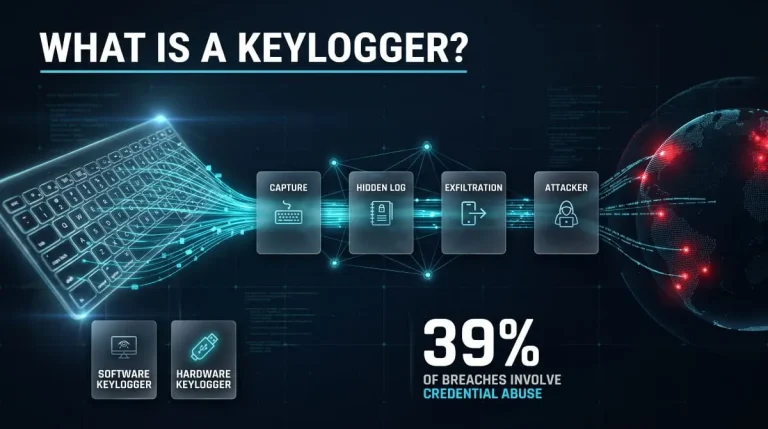
What Is a Keylogger? Definition, Types, Detection and Removal (Complete 2026 Guide)
A keylogger is software or hardware that records every keystroke typed on a device, usually without the user knowing. Attackers use keyloggers to steal passwords, card…
Read more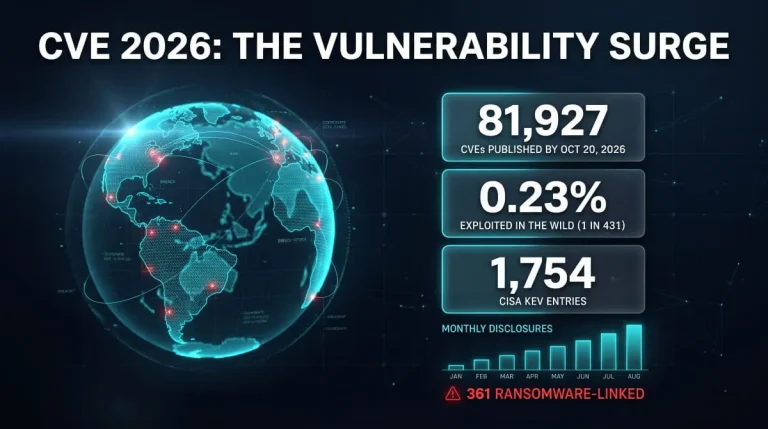
CVE 2026 | The Complete Guide to New, Critical & Actively Exploited Vulnerabilities (Updated Weekly)
CVE 2026 covers every publicly disclosed software flaw assigned a CVE-2026-NNNNN identifier this year, and it is already the largest annual list on record. This guide…
Read more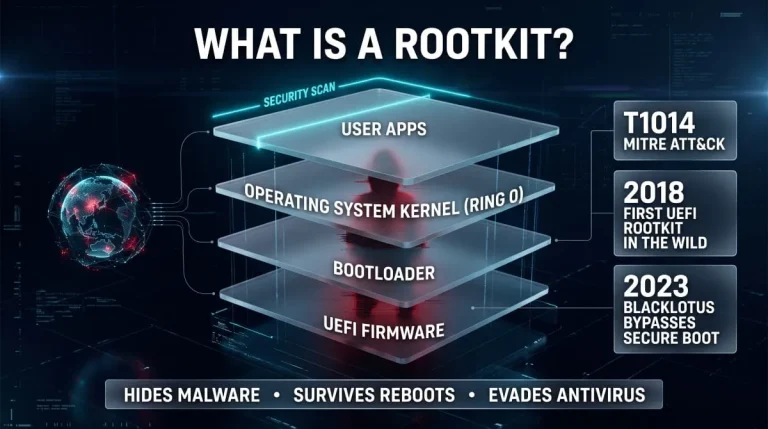
What Is a Rootkit? Definition, Types, Examples, Detection and Removal (Complete Guide)
A rootkit is malicious software that hides itself and the malware it protects by running with the highest privileges and tampering with what the operating system…
Read more