Supply chain monitoring

Supply chain monitoring: See your vendors’ exposure before attackers do.

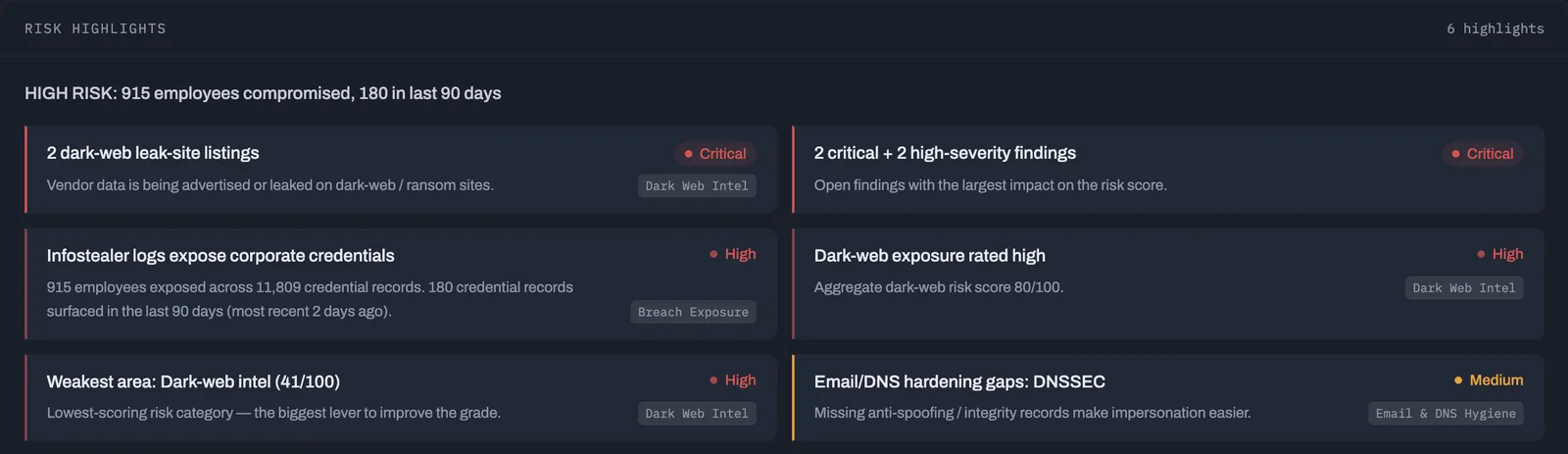
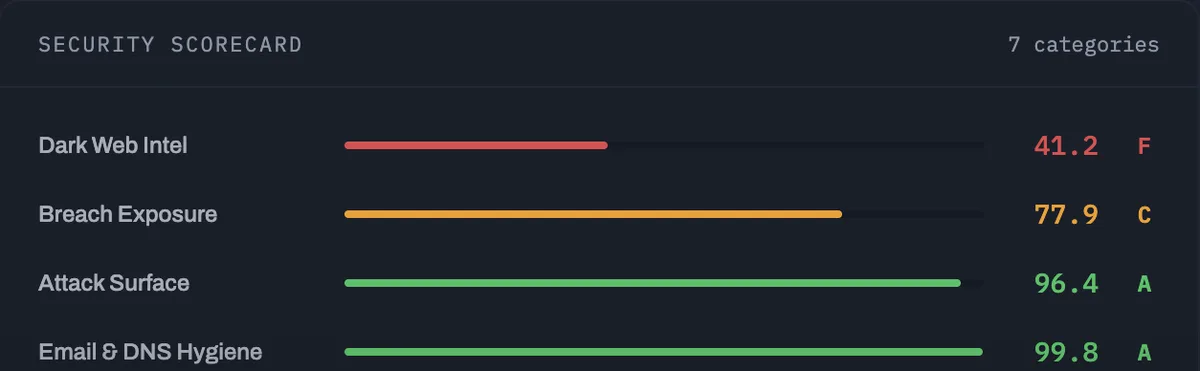
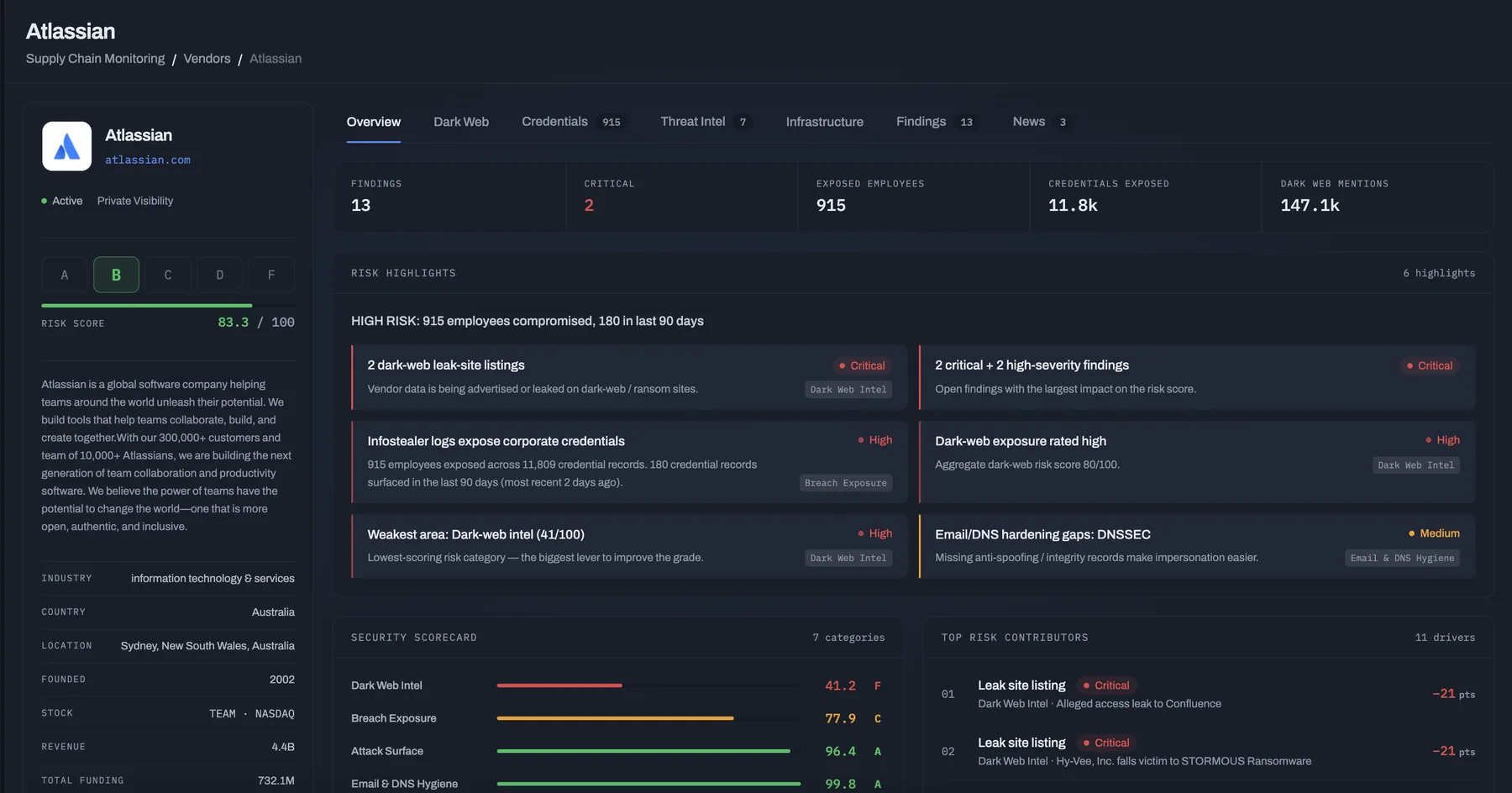
DeXpose supply chain monitoring: a vendor's risk score, grade, risk highlights and security scorecard

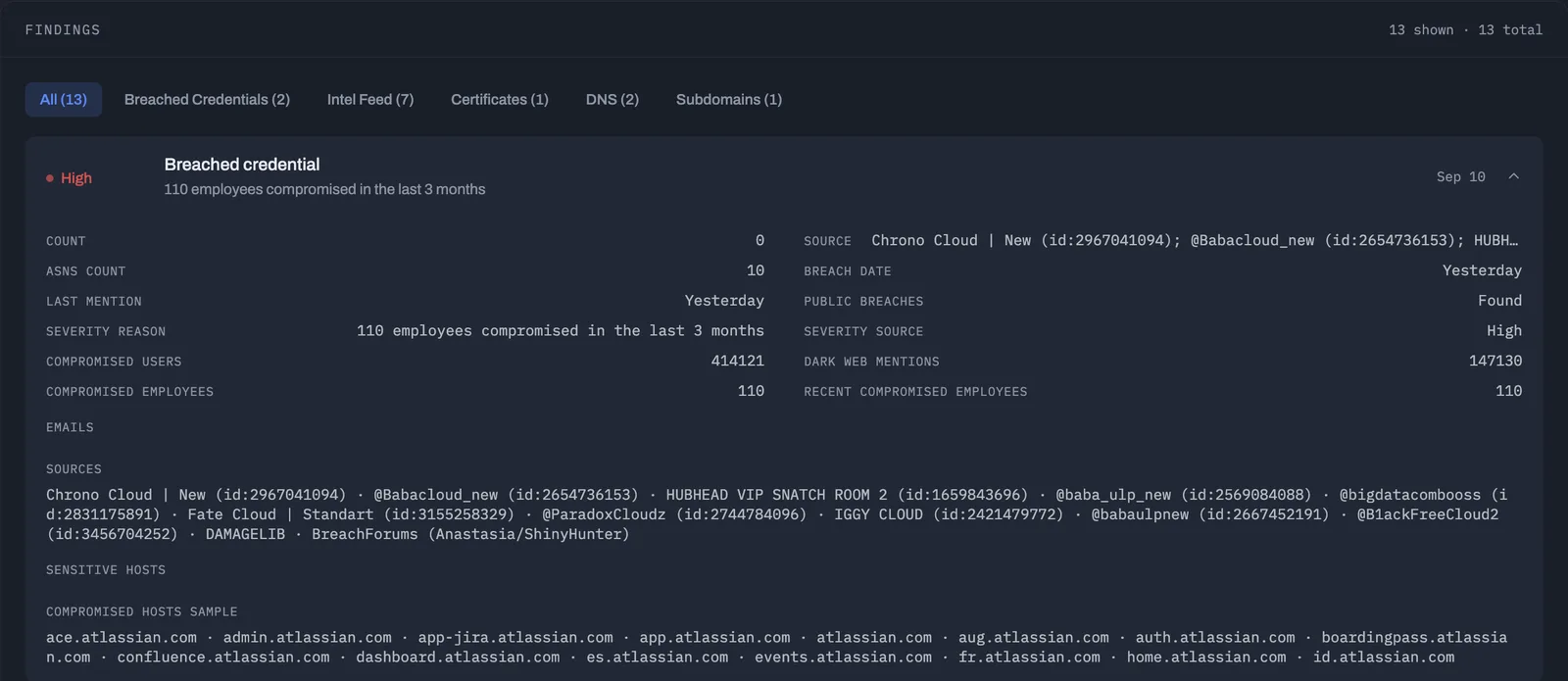
Every supplier, scored from the outside: leaked employee credentials, infostealer infections, dark web and ransomware leak-site mentions, exposed infrastructure and weak email security. One grade per vendor, with the evidence to act on it.

Supply
Why vendor risk matters

Your security now depends on companies you do not control

Attackers rarely break into a well-defended target. They go through a supplier: a stolen login, a hacked mailbox, or a partner that was already breached.

Vendor emails are used to defraud your customers

When a supplier's mailbox is taken over, attackers send real-looking invoices with new bank details to that supplier's clients. This is business email compromise, and it starts with a vendor's leaked password.

A vendor breach or ransomware attack becomes your incident

Your data sits in their systems. A supplier listed on a ransomware leak site, or with staff in fresh infostealer logs, is a live risk to you, not just to them.

Questionnaires expire the day they are signed

An annual assessment describes a vendor's intentions. Continuous vendor risk monitoring shows what is exposed today, with evidence.

Regulators and insurers want proof

DORA, NIS2, ISO 27001 and cyber insurance questionnaires expect ongoing third-party risk management of critical suppliers, and records to show for it.

What we check

Everything we check about each vendor

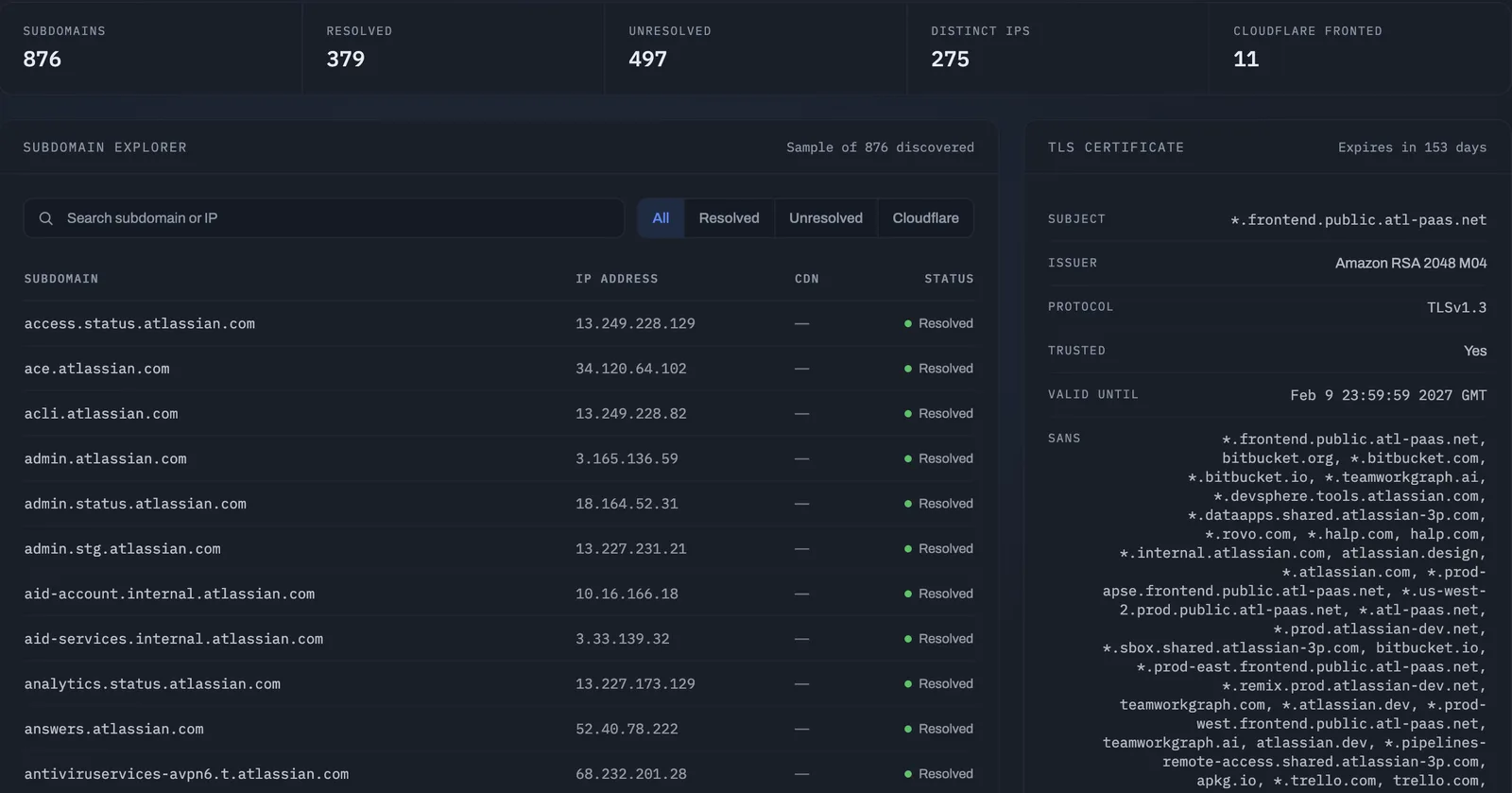
One vendor page holds the score, the reasons behind it and the evidence to send to the supplier. Click a check to see it.

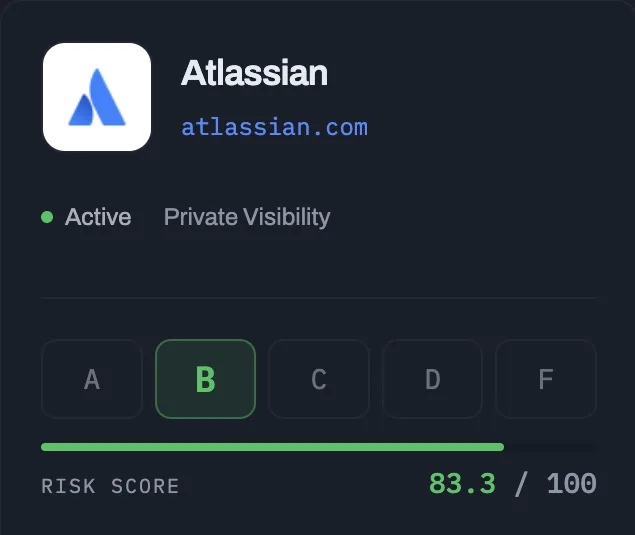
Vendor risk card: grade B, risk score 83.3 out of 100

One vendor security rating everyone understands

Each supplier gets a score from 0 to 100 and a grade from A to F. The score moves as findings open and close, so it is a live measure of vendor risk, not a snapshot from the last review.

  • Company profile, industry and size in context
  • Private view: your vendors, your data
  • Track a vendor getting better or worse
  • Compare suppliers side by side
Coverage

The same intelligence behind every DeXpose product

Supply chain monitoring uses the full DeXpose collection, refreshed all day. These are the numbers behind it.

31BPublic Breachesrecords
58MCompromised Machinesdevices
2.2BInfostealer Recordsrecords
4.8BULPs & Combo Listsrecords
2BDarkweb Entriesentries
52KASNsnetworks

Breach and credential data

Public breaches, ULP dumps, combo lists and infostealer logs, matched to each vendor's domains and apps.

Dark web and leak sites

Ransomware leak sites, dark and deep web markets and forums, Telegram and Discord channels where vendor data is sold or discussed.

Internet-facing infrastructure

Subdomains, DNS and mail security records, IP resolution, CDN detection and TLS certificates.

Public reporting

News of incidents, disclosures and regulatory actions at the vendor, lined up with the technical findings.

How it works

From a vendor list to a ranked risk register

No agents, no vendor onboarding, no questionnaires to chase.

  1. 1

    Add vendors

    Enter suppliers by domain or import your third-party list. Group and tag them by criticality, owner or business unit.

  2. 2

    Monitor all day

    Breach data, stealer logs, leak sites, infrastructure and news are collected and matched to every vendor around the clock.

  3. 3

    Score and alert

    Each vendor gets a grade and a scorecard. New critical or high findings alert you in the dashboard, by email, or in Slack, Teams, Jira and ServiceNow.

  4. 4

    Act with evidence

    Warn finance about a compromised vendor mailbox, send the supplier a precise fix request, limit access while it is fixed, and keep the record.

  • Fewer supplier-borne incidents. Compromised vendors surface before the attacker moves on to you.
  • Invoice fraud stopped early. Finance knows which supplier mailboxes cannot be trusted.
  • Vendor reviews with evidence. Findings, sources and dates instead of opinions.
  • Audit-ready oversight. Continuous third-party risk records for DORA, NIS2, ISO 27001 and insurers.
FAQ

Common questions

Short answers on vendor risk monitoring and how DeXpose does it.

What is supply chain monitoring?

It is vendor risk monitoring from the outside. DeXpose watches the companies you depend on for signs they are compromised: leaked staff logins, infostealer infections, ransomware and leak-site mentions, exposed servers and weak email security. You get a risk score for each vendor and the evidence behind it.

How is this different from a vendor security questionnaire?

A questionnaire is what a vendor says about itself once a year. Monitoring is what is actually exposed today. Most third-party risk management teams use both: the questionnaire for the contract, monitoring for the months in between.

Do my vendors need to install or approve anything?

No. Everything comes from external sources: breach data, infostealer logs, dark web and leak sites, DNS, certificates and public infrastructure. Add a vendor by domain and monitoring starts right away.

Can vendor emails really be used against my company?

Yes, and it is one of the most common frauds. When a supplier's mailbox is taken over, attackers send real-looking invoices with new bank details to that supplier's customers. Knowing which vendors have exposed logins lets you warn finance before a payment goes out.

How fast will I know if a vendor is breached or hit by ransomware?

Leak-site listings, new breach records and stealer logs are collected all day. A vendor that shows up on a ransomware leak site or in a fresh stealer log raises a finding and an alert within minutes of collection.

How many vendors can I monitor?

As many as your plan allows, from a few critical suppliers to your whole third-party list. Vendors can be grouped and tagged so procurement, security and compliance each see the ones they own.

See how exposed your key vendors are

Run a free dark web report on any supplier's domain, or book a demo to monitor your whole third-party list.