
Ransomware Attack | What It Is, How It Works, and How to Prevent, Detect & Recover From One
A ransomware attack is a type of cyberattack in which malicious software encrypts an organization’s files or systems, then demands payment, usually in cryptocurrency, in exchange for the decryption key. Modern attacks increasingly add a second layer of pressure. Before encrypting anything, attackers quietly steal sensitive data and threaten to leak it publicly if the ransom isn’t paid, a tactic known as double extortion.
Ransomware has grown from a niche cybercrime into one of the costliest threats facing organizations of every size. According to IBM’s 2024 Cost of a Data Breach Report, ransomware attacks now cost an average of $4.91 million per incident once containment, downtime, and recovery are factored in. That figure climbs sharply for organizations without tested backups or an incident response plan.
This guide breaks down exactly how a ransomware attack unfolds from initial AccessAccess to extortion, the major ransomware groups and attack types behind today’s incidents, which industries face the highest risk, and the concrete steps your organization can take to prevent an attack, spot the early warning signs, and recover if one happens.
What Is a Ransomware Attack?
A ransomware attack is a cyberattack in which malware locks or encrypts an organization’s data, then holds it hostage until a ransom is paid, typically in cryptocurrency, and typically with a deadline attached to raise the pressure. Rather than stealing data quietly and disappearing, ransomware operators want to be noticed: the entire attack is built around forcing a response, whether that’s a payment, a public leak, or both.
How Ransomware Differs From Other Malware
Most malware is designed to stay hidden; spyware harvests data in the background, and worms spread quietly to maximize reach. Ransomware inverts that logic. Its goal isn’t stealth; it’s leverage. Once it activates, it deliberately announces itself with an on-screen ransom note, turns off recovery options like backups and shadow copies, and locks users out of the very systems they’d need to respond. That’s what separates it from a conventional data breach: a breach is often about extracting information unnoticed, while a ransomware attack is about disrupting operations so completely that paying feels like the fastest way back to normal.
Common Ransomware Attack Vectors (Phishing, RDP, Vulnerabilities)
Ransomware rarely starts with the encryption itself; it starts with attackers finding a way in. Phishing remains the most common entry point industry-wide, tricking an employee into handing over credentials or opening a malicious attachment that quietly installs a foothold. In fact, phishing has recently re-emerged as the most observed method of gaining initial AccessAccess, accounting for over a third of incidents where the entry point could be determined. Close behind is exposed Remote Desktop Protocol (RDP): attackers scan the internet for open or weakly secured remote access ports, then brute-force or buy their way in using stolen credentials. Unpatched software vulnerabilities round out the top three, giving attackers a way in without needing a human to click anything at all. Once inside through any of these paths, the attacker’s next move is the same: quietly expanding AccessAccess before deploying the ransomware itself.
How a Ransomware Attack Works (Anatomy & Stages)
A ransomware attack rarely happens in one step; it unfolds as a chain of stages, from an attacker sneaking into the network to the moment a ransom note appears on screen. Understanding that chain matters because most opportunities to stop an attack occur before encryption ever starts, not after.
Initial Access → Encryption → Extortion Chain
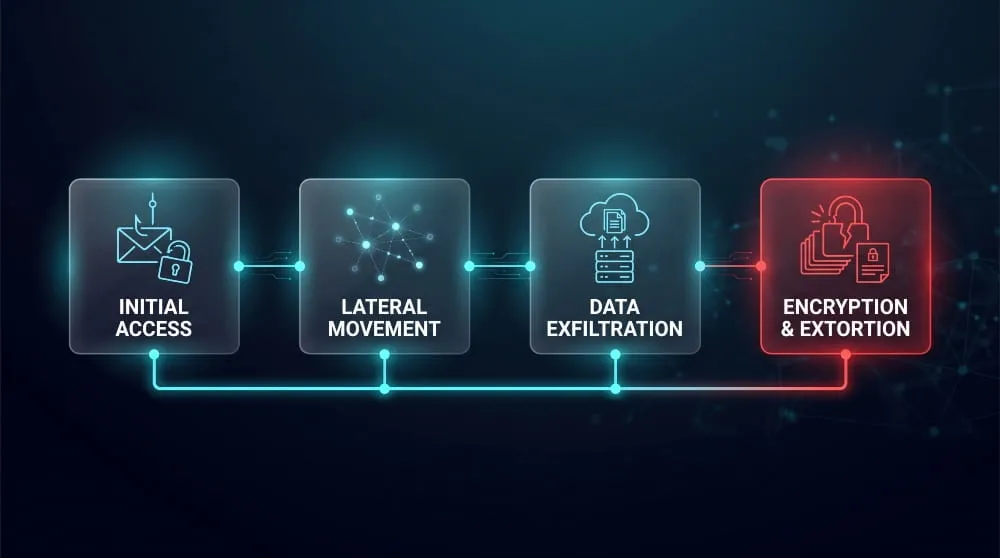
Every ransomware attack begins with initial AccessAccess: an attacker gets a foothold through a phished credential, an exposed remote access port, or an unpatched vulnerability. From there, they don’t encrypt anything right away. Instead, they move laterally across the network, escalating privileges and mapping out valuable systems and backups, often spending days or weeks undetected before making a move. Once the attacker has positioned themselves for maximum damage, two things typically happen in quick succession: sensitive data is quietly copied out of the network (exfiltration), and then ransomware payloads are deployed across as many systems as possible simultaneously, encrypting files and displaying a ransom demand. The final stage is extortion: the attacker contacts the victim, sets a payment deadline, and applies pressure to force a response before backups can be restored or law enforcement gets involved.
Single vs. Double vs. Triple Extortion
Not every ransomware attack applies the same amount of pressure. In a single-extortion attack, the only leverage is encryption itself: pay up, or lose AccessAccess to your files. Double extortion adds a second threat: attackers steal data before encrypting it, so even an organization that restores from backup still faces the threat of that stolen data being leaked or sold. This has become the default playbook rather than the exception; Mandiant found confirmed data theft in 77% of ransomware intrusions in 2025, up from 57% the year before. Triple extortion pushes further still, layering on tactics like DDoS attacks against the victim’s public-facing systems or direct outreach to customers, patients, or employees whose data was stolen, applying reputational pressure well beyond the original target.
Types of Ransomware & Notable Ransomware Families
Ransomware isn’t a single piece of software; it’s a category that includes several distinct attack styles, and knowing the difference helps explain why some organizations recover in hours while others are locked out for weeks. Broadly, ransomware falls into a few core types, and it’s built and deployed by a rotating cast of criminal groups that operate less like lone hackers and more like businesses.
Encrypting vs. Locker vs. Leak-Based Ransomware
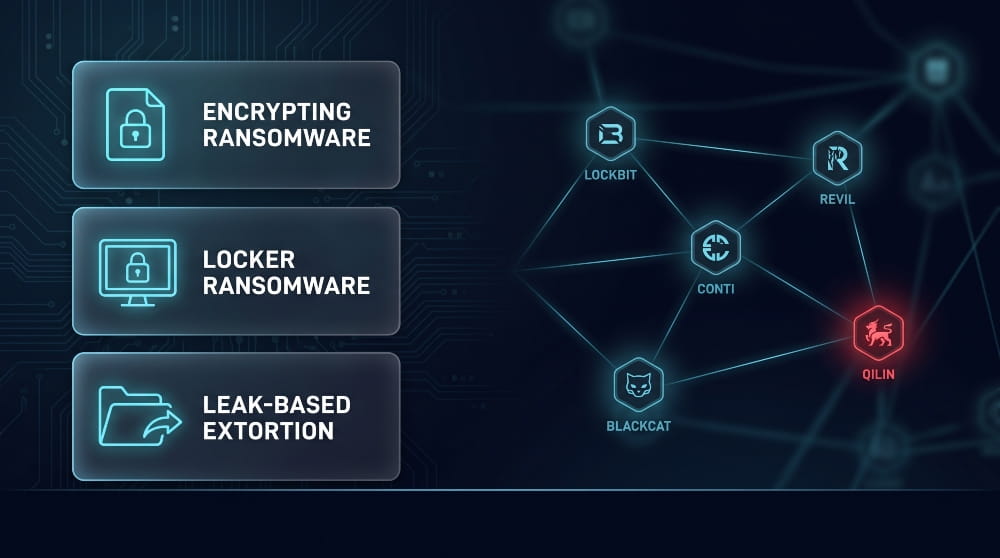
Encrypting ransomware, sometimes called crypto-ransomware, is the most common form: it scrambles individual files using strong encryption, leaving the operating system usable but the data itself completely inaccessible without a decryption key. Locker ransomware takes a blunter approach; instead of touching individual files, it locks the victim out of the entire device or screen, often leaving files untouched but the system unusable until payment. A newer variant, leak-based (or data-only) extortion, skips encryption entirely: attackers steal sensitive files and threaten to publish or sell them, betting that the fear of exposure is enough pressure without ever needing to lock a single system. This shift is already measurable; extortion-only extortion jumped from just 2% to 22% of incident response cases in a single year, which means backup strategies alone no longer guarantee a full recovery from every ransomware incident.
Major Ransomware Groups (LockBit, REvil, Conti, BlackCat, Qilin, Akira)
Most ransomware today is deployed by organized groups running a Ransomware-as-a-Service (RaaS) model, where the group that builds the malware rents it out to “affiliates” who carry out the actual attacks in exchange for a cut of the ransom. LockBit, REvil, and Conti were among the most prolific groups of the early 2020s, responsible for thousands of attacks against businesses, hospitals, and government agencies before international law enforcement operations disrupted much of their infrastructure. BlackCat (also known as ALPHV) rose in their place before facing its own takedown. That disruption hasn’t slowed the broader threat; it’s fragmented it: newer groups like Qilin and Akira have become dominant forces, with Qilin alone linked to hundreds of victims in a single recent month. The pattern holds regardless of which specific group is active at any given time: when one operation is taken down, affiliates and code simply resurface under a new name.
Notable Ransomware Attacks in History
Some ransomware attacks matter beyond their immediate victims; they reshape how governments, insurers, and security teams think about the threat entirely. The four incidents below are the ones most often cited as turning points, each illustrating a different way ransomware can cause damage.
WannaCry (2017)
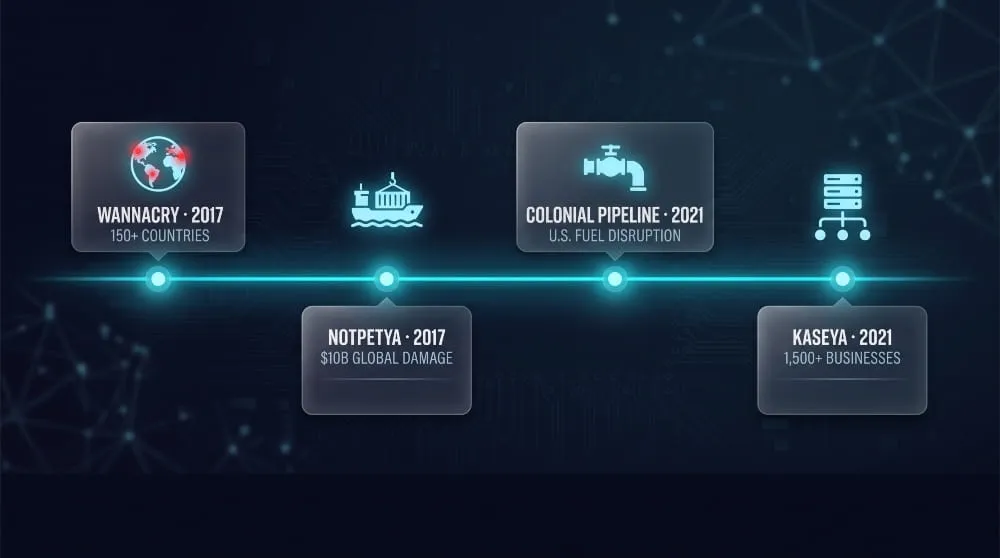
WannaCry is the ransomware attack most people picture when they hear the term, and for good reason: it spread to more than 150 countries in a matter of days by exploiting a Windows vulnerability, without needing a single victim to click anything. It crippled the UK’s National Health Service, forcing hospitals to cancel appointments and divert ambulances, and hit major organizations including Telefónica and Honda along the way. Global losses from WannaCry are estimated at around $4 billion, making it one of the most financially damaging cyber incidents ever recorded, even though the ransom itself demanded only a few hundred dollars per victim.
NotPetya / Maersk (2017)
Just weeks after WannaCry, NotPetya struck, and it turned out to be something worse than ordinary ransomware. Disguised as a Ukrainian tax software update, it spread rapidly to companies with any presence in Ukraine, encrypting data with no real way to pay for its return; investigators later concluded it was a destructive wiper built to look like ransomware, not a genuine extortion attempt. Global shipping giant Maersk was among the hardest hit, forced to halt operations at 76 port terminals and rebuild 4,000 servers and 45,000 PCs from scratch, at a cost of roughly $300 million. Combined losses across all NotPetya victims, including Merck and FedEx’s TNT Express, are estimated at $10 billion, making it the most expensive cyberattack in history.
Colonial Pipeline (2021)
Colonial Pipeline showed the world what a ransomware attack could do to physical infrastructure, not just data. After the DarkSide ransomware group breached the company’s IT network, not its operational pipeline systems, Colonial proactively shut down fuel delivery across the U.S. East Coast as a precaution, triggering gas shortages and panic-buying across multiple states. The company paid nearly $5 million in ransom within hours of the attack, a decision that reignited a national debate over whether organizations should ever pay, and directly prompted new federal cybersecurity requirements for pipeline operators.
Kaseya Supply-Chain Attack (2021)
Kaseya demonstrated how a single ransomware attack can cascade far beyond its original target. The REvil group exploited a vulnerability in Kaseya’s remote IT management software, which its customers, mostly managed service providers, used to support hundreds of smaller businesses each. That single breach ultimately affected up to 1,500 downstream businesses, from a Swedish supermarket chain to small dental practices, while REvil demanded $70 million for a universal decryption key. It remains one of the clearest examples of supply-chain risk in ransomware: attacking one vendor gave criminals a foothold in thousands of organizations at once.
Ransomware Attack Statistics & Trends
Ransomware has moved from a background risk to one of the defining costs of doing business online, and the numbers back that up: it’s no longer a rare, catastrophic event but a routine part of the breach landscape that security and finance teams now have to budget for.
Cost of a Ransomware Attack
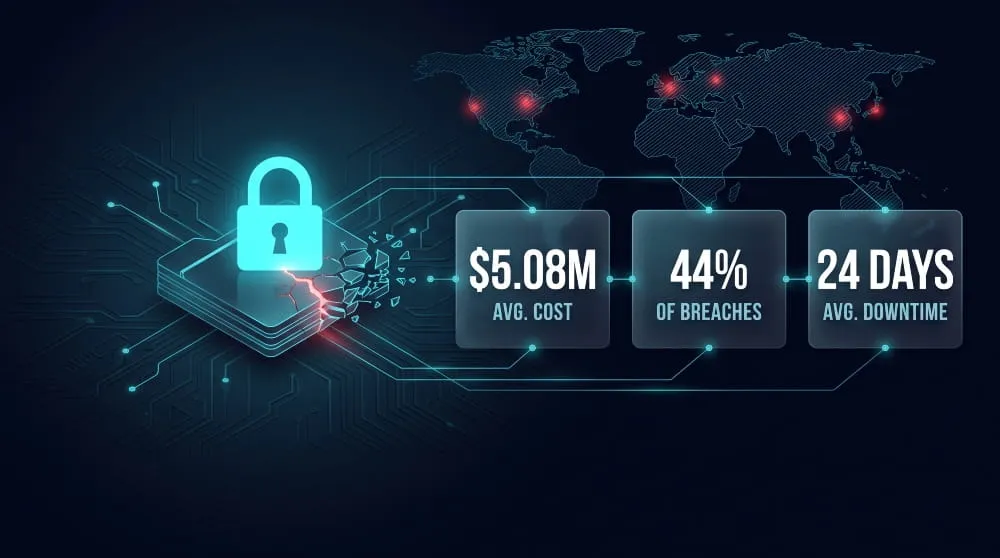
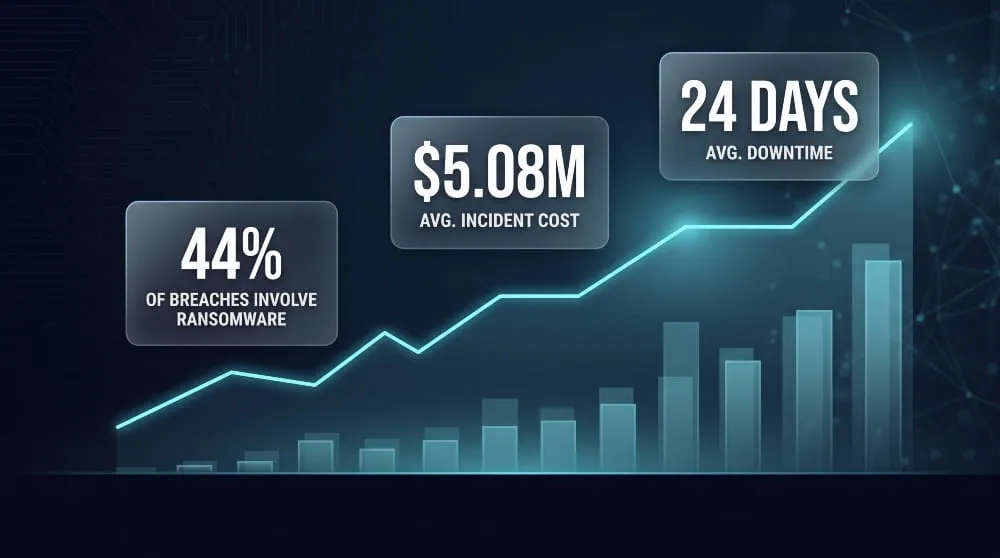
The ransom demand itself is rarely the biggest expense in a ransomware attack; the real cost comes from downtime, remediation, legal exposure, and lost business while systems are rebuilt. Even accounting for the fact that only about 23% of victims now pay a ransom, a typical ransomware incident still costs an average of $5.08 million in recovery and downtime. That gap between ransom payments and total cost is widening, too: median ransom payments themselves have climbed sharply as attackers shift toward fewer, larger, more targeted demands rather than casting a wide net for small payouts.
Frequency and Growth Year-Over-Year
Ransomware’s share of overall breaches has grown fast enough to reshape how organizations prioritize security spending. Ransomware was involved in 44% of breaches in 2025, up from roughly 32% the year before, a jump that reflects both more attacks and better detection of ransomware as the root cause behind incidents once logged simply as generic breaches. Smaller organizations have borne the brunt of that growth disproportionately: limited security budgets, slower patch cycles, and thinner IT teams make small and mid-sized businesses far more likely than large enterprises to see ransomware behind any breach they experience.
Industries Most Targeted by Ransomware
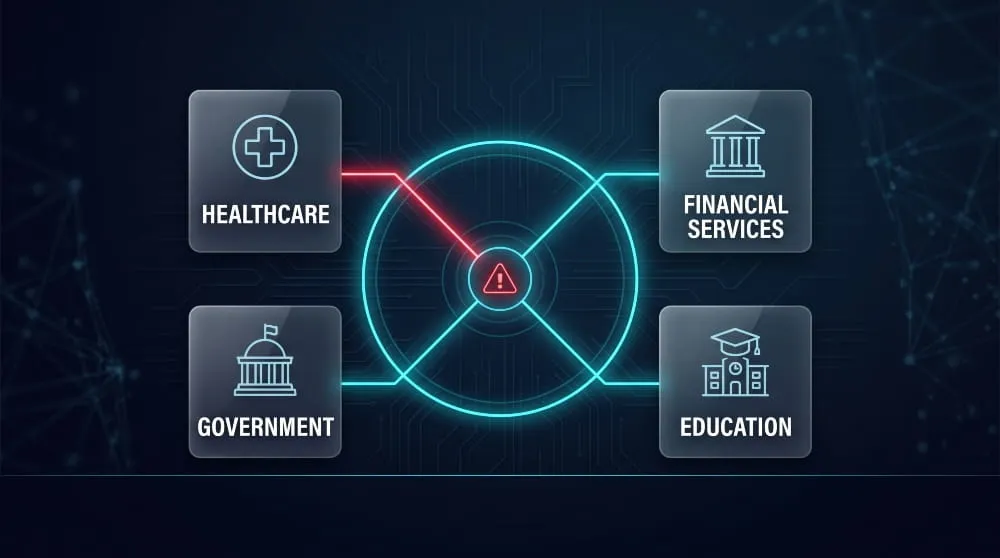
Ransomware groups don’t target every organization equally; they gravitate toward sectors where downtime is unaffordable, data is sensitive, and the pressure to pay quickly is highest. Three sectors consistently top the list: healthcare, financial services, and government.
Healthcare & Hospitals
Hospitals make an especially attractive target because the cost of downtime isn’t just financial; it’s measured in delayed surgeries, diverted ambulances, and disrupted patient care, which puts enormous pressure on healthcare organizations to pay quickly rather than rebuild from backups. Public administration and healthcare tied as the most targeted industry verticals in a recent quarter, each accounting for 24% of all ransomware engagements tracked. Beyond the operational stakes, healthcare systems hold some of the most sensitive data available: medical records, insurance details, and Social Security numbers, making them equally valuable to attackers running double-extortion campaigns focused on data theft rather than encryption alone.
Financial Services & Banks
Banks and financial institutions face a different kind of pressure: the sheer value of the data and transactions flowing through their systems makes them a high-reward target, even though the sector generally maintains stronger security maturity than most industries. Ransomware attacks against financial services tend to focus less on locking files and more on exfiltrating account data, transaction records, and customer PII, since that information carries direct resale value on top of any extortion leverage. The sector’s tighter regulatory requirements around breach disclosure also mean attacks against banks draw outsized public attention, which attackers can use to increase pressure during ransom negotiations.
Government, Schools & Critical Infrastructure
Government agencies, school districts, and critical infrastructure operators share a common vulnerability: chronically underfunded IT budgets paired with systems that can’t tolerate extended outages. School districts in particular have become a favored target precisely because they often lack dedicated security staff. At the same time, a ransomware attack that takes down enrollment systems or grading platforms mid-semester creates immediate pressure to resolve the disruption. Critical infrastructure, utilities, pipelines, and water systems carry the highest stakes of all, since an attack there can ripple out into public safety consequences well beyond the targeted organization itself, which is exactly why incidents like Colonial Pipeline drew national policy attention rather than staying a private IT matter.
How to Prevent a Ransomware Attack
There’s no single fix for ransomware; the organizations that avoid becoming a headline are the ones stacking multiple layers of defense so that a failure in any one control doesn’t lead directly to a full-blown attack. Prevention breaks down into two categories: the technical safeguards that reduce and contain exposure, and the process-level habits that keep people from becoming the weakest link.
Technical Controls (Backups, Patching, EDR)
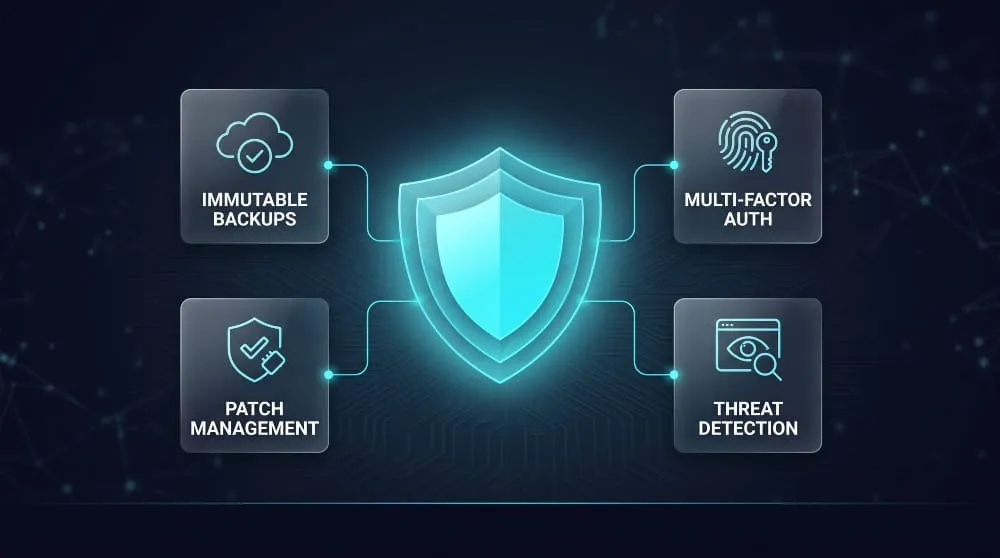
Patching remains one of the highest-leverage controls available, since a large share of ransomware attacks still start with a known, unpatched vulnerability that a fix has already existed for. Endpoint detection and response (EDR) tools add a second layer by catching lateral movement and privilege escalation between initial access and the moment ransomware actually deploys, giving security teams a chance to intervene before encryption starts. Backups round out the technical stack, but they need to be immutable and isolated from the production network, since attackers routinely target backup systems directly to remove the fallback option before triggering encryption. It’s worth being clear-eyed about limits here too: multi-factor authentication is essential, but Sophos found MFA was already deployed in 97% of recent credential-based attacks, meaning it didn’t prevent compromise on its own, a reminder that no single control, however important, works in isolation.
Employee & Process-Level Prevention
Technology alone can’t close every gap, because phishing and social engineering remain reliable ways for attackers to get a human to hand over AccessAccess voluntarily. Regular, realistic phishing simulations help employees recognize the pretexts attackers actually use, rather than the obvious scams most training still focuses on. Beyond individual awareness, organizations need process-level readiness: a documented incident response plan, network segmentation that limits how far an attacker can move after gaining a foothold, and a tested tabletop exercise that walks leadership through a realistic ransomware scenario before they’re ever forced to make those decisions under real pressure.
Signs & Detection of a Ransomware Attack
The earliest signs of a ransomware attack rarely look like an attack at all; they look like ordinary IT hiccups, which is exactly why so many go unnoticed until encryption has already started. Catching those early indicators is often the difference between isolating a single infected machine and losing an entire network.
Early Warning Indicators
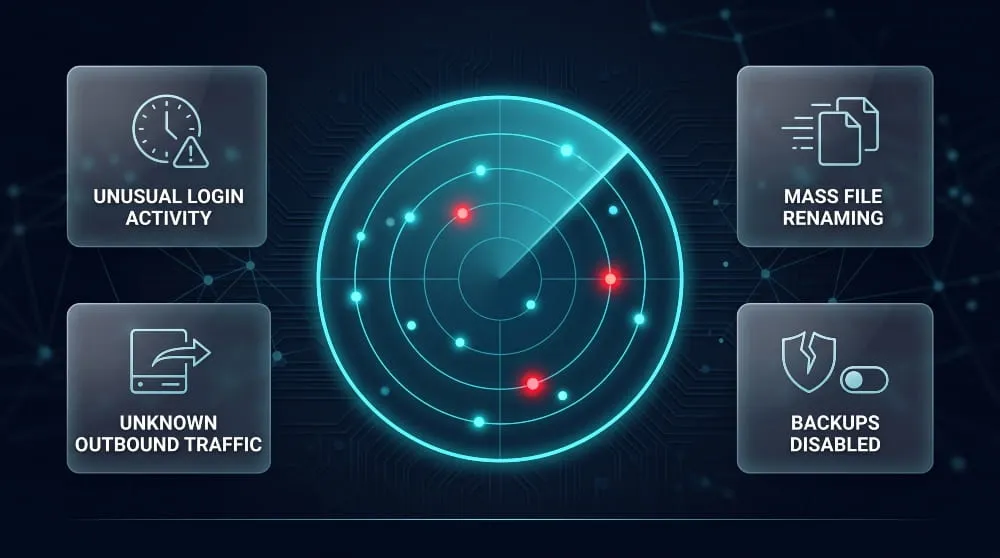
Before any ransom note appears, attackers typically spend time quietly exploring the network, and that reconnaissance phase leaves traces if anyone’s looking for them. Unusual login activity, successful AccessAccess at odd hours, from unfamiliar locations, or on accounts that rarely authenticate, often signals that stolen or brute-forced credentials are already in use. A sudden spike in file access or renaming activity, especially across shared drives, can indicate an encryption process testing its reach before deploying at scale. Security teams also watch for the disabling of backup jobs, antivirus software, or shadow copies, since attackers deliberately sabotage recovery options before triggering the main payload; one report found that 94% of ransomware incidents involved attempts to compromise the victim’s backups. Unexplained new admin accounts, unfamiliar remote access tools appearing on endpoints, and outbound traffic to unrecognized external servers round out the pattern; any one of these alone might be routine, but together they’re the clearest warning that a ransomware attack is already underway before the files ever lock.
Ransomware Attack Response & Recovery
Once a ransomware attack is confirmed, the decisions made in the first few hours shape how the entire incident plays out, how much data is lost, how long systems stay down, and how much the recovery ultimately costs. Response splits into three phases: immediate containment, the ransom decision, and the technical work of rebuilding.
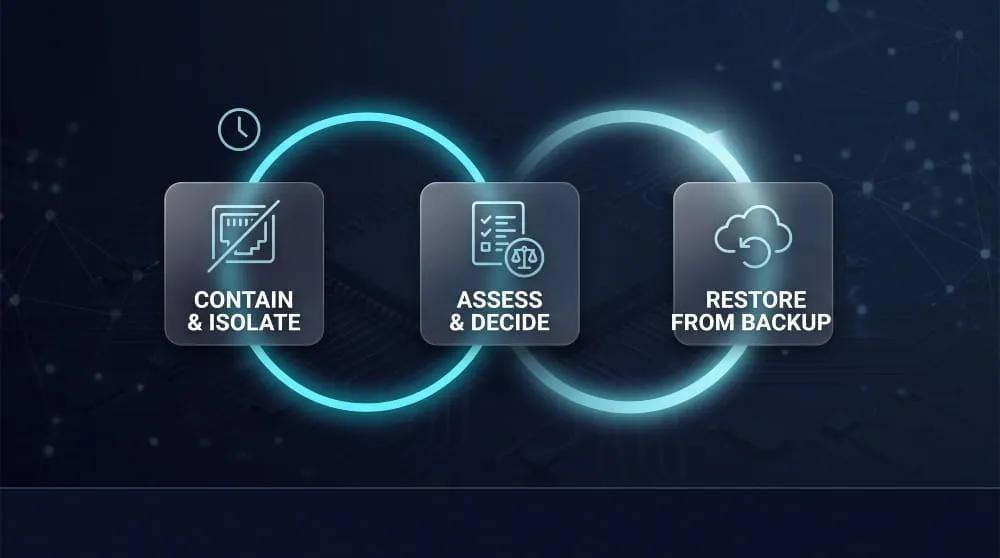
First 24 Hours: Incident Response Steps
The priority is containment: isolating infected systems from the network immediately to stop encryption from spreading to backups, servers, and connected devices that haven’t been hit yet. That means disconnecting affected machines from Wi-Fi and wired networks rather than shutting them down entirely, since powering off a device can destroy forensic evidence needed to understand how attackers got in. From there, the incident response plan activates: notifying leadership and legal counsel, engaging a forensics team or incident response firm if one is on retainer, and preserving logs before they roll over or get deleted. Law enforcement, the FBI in the U.S., or the equivalent national cybercrime unit elsewhere, should be contacted early too, both for investigative support and because reporting requirements often apply depending on the data involved.
Should You Pay the Ransom?
Paying the ransom is never a guaranteed fix, and it comes with real downsides beyond the payment itself: it funds future attacks, offers no assurance the decryption key will actually work, and doesn’t undo any data the attacker already stole and could still leak regardless of payment. That risk calculus is shifting organizations away from paying; only about 23% of ransomware victims paid in 2025, down from roughly half of victims a few years earlier, as more companies invest in backups and incident response capability that make refusal a viable option. That said, the decision isn’t purely philosophical for every organization; a hospital facing patient safety risk or a company with no viable backups may face pressure that a well-prepared organization wouldn’t. Whatever the decision, it should involve legal counsel and, where required, coordination with law enforcement, since paying certain sanctioned groups can carry its own legal exposure.
Recovering Data and Systems
Recovery starts with restoring from clean, verified backups rather than trusting a decryption tool provided by the attacker, even if a ransom was paid. Systems should be rebuilt from known-good images rather than simply cleaned in place, since ransomware often leaves backdoors behind that a surface-level cleanup won’t catch. Before anything goes back into production, it needs to be validated against the vulnerability or credential compromise that allowed the original attack; restoring a system to a still-vulnerable state just invites a repeat incident, which is common enough that many organizations get hit a second time within months of the first attack if the root cause was never fixed.
How to Report a Ransomware Attack
Reporting a ransomware attack isn’t optional for most organizations, and doing it quickly can mean the difference between isolated help from federal responders and a missed regulatory deadline. In the U.S., that means notifying CISA and, in most cases, federal law enforcement as well.
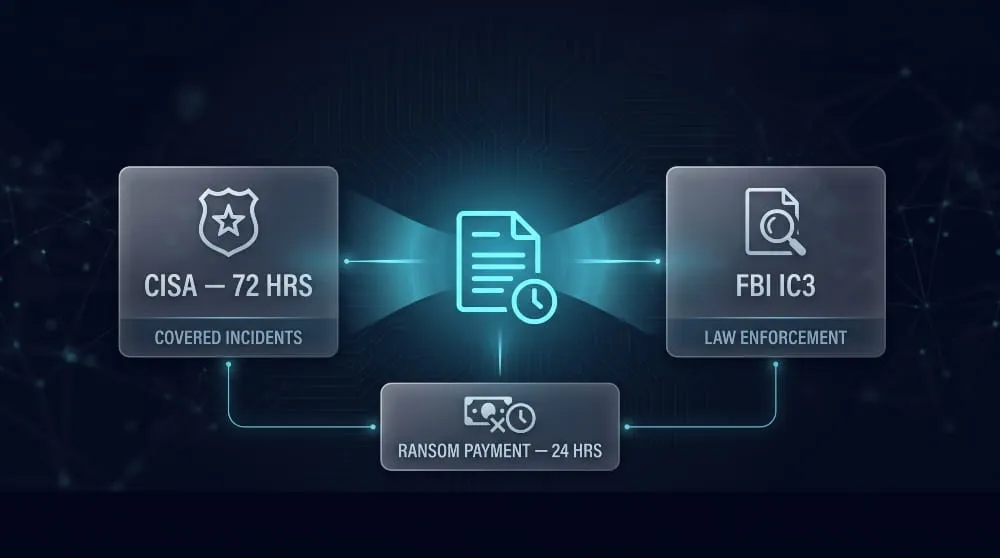
Reporting Requirements (CISA, Law Enforcement)
Any organization hit by a ransomware attack should report it to the FBI’s Internet Crime Complaint Center (IC3) and CISA, both of which can offer decryption resources, threat intelligence on the specific ransomware strain involved, and coordination with other victims of the same campaign. For critical infrastructure operators specifically, reporting is moving from best practice to legal requirement under the Cyber Incident Reporting for Critical Infrastructure Act (CIRCIA). Once fully in effect, the rule will require covered entities to report a substantial cyber incident to CISA within 72 hours, and any ransomware payment within 24 hours. That rule’s exact effective date has moved more than once as CISA finalizes it, so organizations in the 16 covered critical infrastructure sectors should confirm current requirements directly with CISA rather than assume an old timeline still applies. Beyond CISA and the FBI, sector-specific rules may add their own reporting clocks; healthcare organizations under HIPAA and public companies under SEC disclosure rules both have separate, overlapping obligations that a legal team should map out before an attack happens, not during one.
Frequently Asked Questions (FAQ’s)
Ransomware raises a handful of questions constantly enough that they deserve direct, standalone answers, starting with how ransomware fits into the broader category of cyberattacks, how long recovery realistically takes, and whether it can be stopped altogether.
What’s the difference between ransomware and a cyberattack?
A cyberattack is the broad category: any attempt to compromise, damage, or gain unauthorized Access to a computer system, covering everything from phishing to DDoS to data theft. Ransomware is one specific type of cyberattack, defined by its goal: encrypting or blocking AccessAccess to data and demanding payment for its return. Every ransomware attack is a cyberattack, but not every cyberattack involves ransomware; a stolen-data breach with no encryption or extortion demand, for instance, is a cyberattack but not a ransomware incident.
How long does it take to recover from a ransomware attack?
Recovery timelines vary widely based on preparation, but industry data points to a consistent range. The average downtime a company experiences after a ransomware attack is around 24 days. However, that figure masks a big split: well-prepared organizations with tested, offline backups often restore critical systems within days. In contrast, those without clean backups or a rehearsed response plan can face weeks or months of disruption. The full lifecycle, from the moment attackers first gained AccessAccess to complete containment, typically stretches even longer than the visible downtime, since forensic investigation and validation work continue well after systems are technically back online.
Can ransomware attacks be prevented entirely?
No single control eliminates ransomware risk, and any vendor or guide claiming otherwise is overselling. What layered defenses can do is dramatically reduce the odds of a successful attack and limit the damage when prevention fails: patching known vulnerabilities, enforcing MFA, training employees against phishing, and maintaining isolated backups all close off different entry points and fallback options attackers rely on. The realistic goal isn’t zero risk; it’s making an attack difficult enough to execute and quick enough to contain that it never reaches the point of full encryption or a six-figure ransom demand.
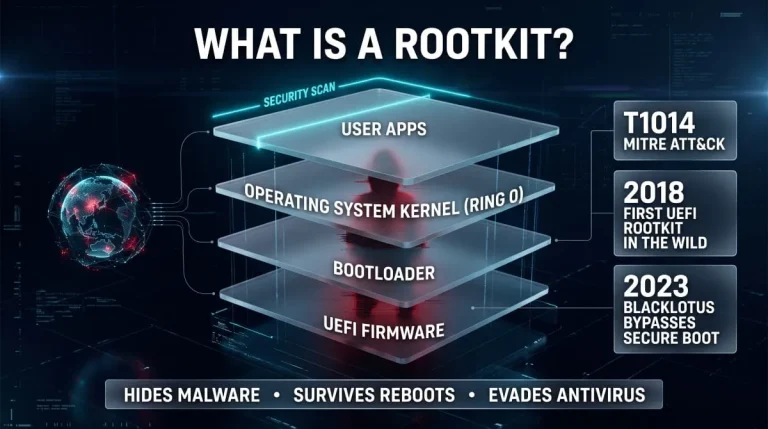
What Is a Rootkit? Definition, Types, Examples, Detection and Removal (Complete Guide)
A rootkit is malicious software that hides itself and the malware it protects by running with the highest privileges and tampering with what the operating system…
Read more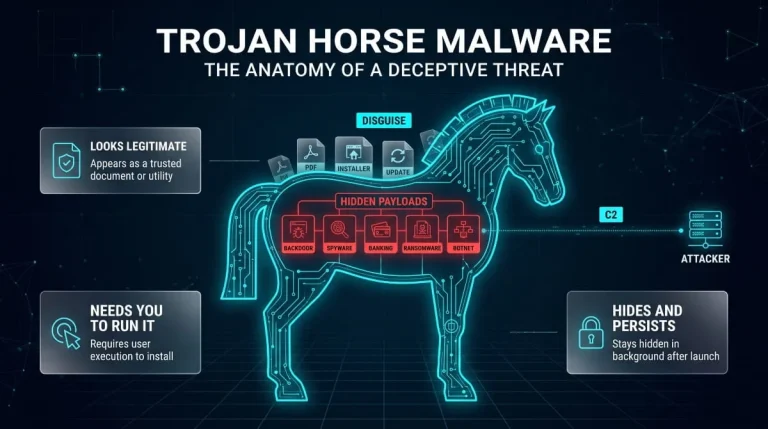
Trojan Horse Malware (Computer Trojan) | What It Is, How It Works, Types, and How to Remove It
A computer trojan is malware that disguises itself as legitimate software to trick you into running it, then quietly steals data, opens a backdoor, or installs…
Read more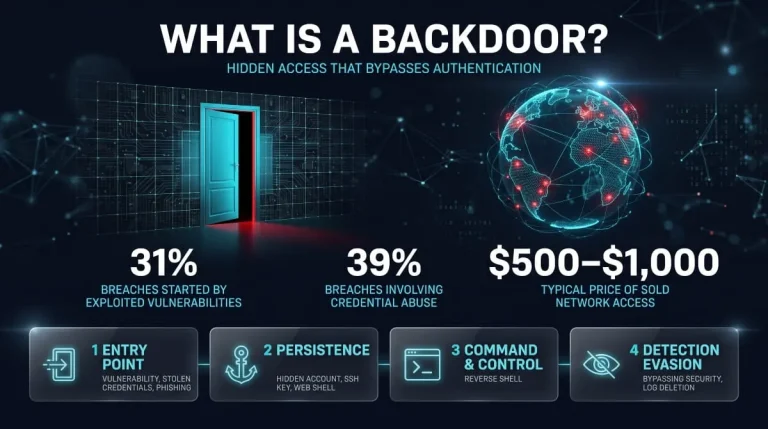
What Is a Backdoor? Meaning, Types, Real Examples, Detection & Removal (2026 Guide)
What Is a Backdoor in Cybersecurity? A backdoor in cybersecurity is a hidden method that bypasses normal authentication or security controls to access a system, network,…
Read more