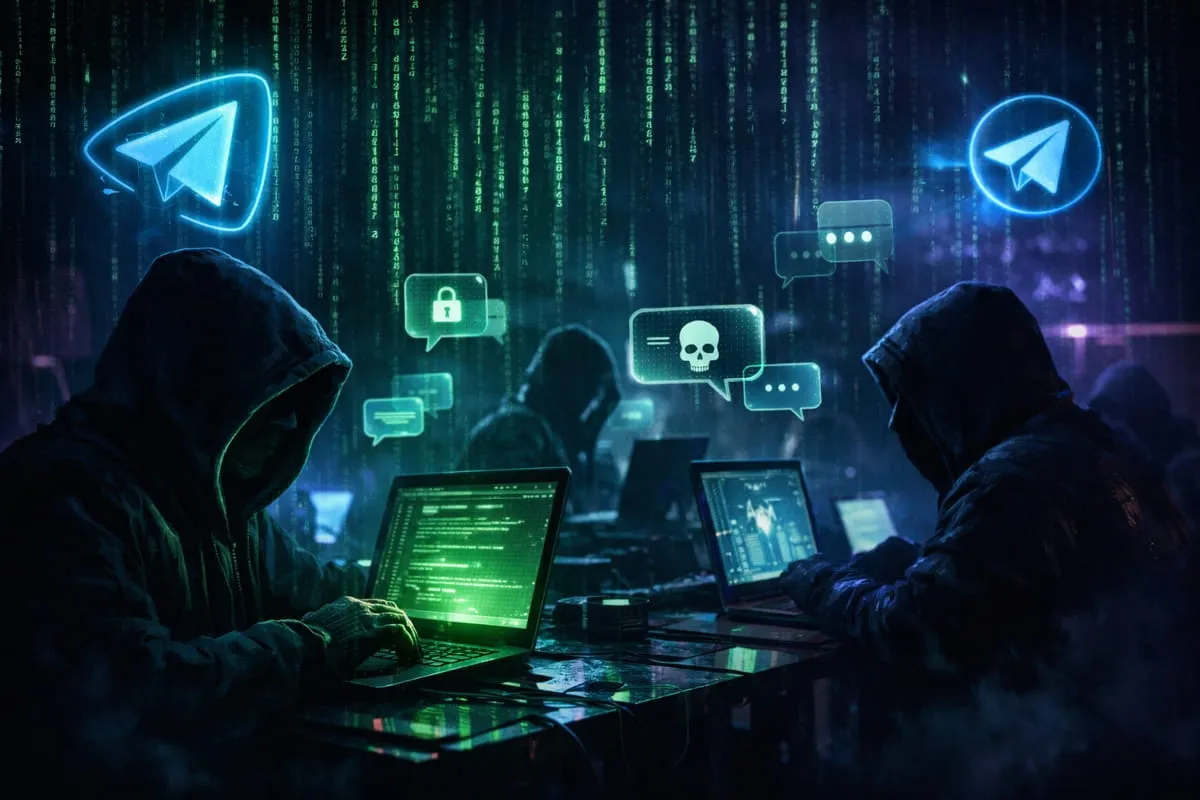
When most people think of the dark web, they picture Tor browsers, .onion addresses, and hidden marketplaces buried behind layers of encryption. Few would have predicted that one of the most active corners of underground cyber activity in 2025 would be Telegram, an app sitting on everyone’s phone, right next to their banking app and family group chat.
Yet here we are. Dark web Telegram channels have quietly become one of the most significant intelligence sources in cybersecurity, and one of the most misunderstood.
This guide exists to cut through that confusion. Whether you’re a SOC analyst trying to understand what’s actually moving through darknet Telegram channels, a threat intelligence professional building a monitoring workflow, or a security leader trying to assess organizational exposure, this is the grounded, no-hype breakdown you’ve been looking for.
Why Telegram Became a Dark Web Alternative
The shift didn’t happen overnight. It accelerated in 2021 when WhatsApp’s controversial privacy policy update drove millions of users toward more private messaging platforms. Telegram, with its large group capacities, channel broadcasting model, anonymous account creation, and end-to-end encryption for secret chats, was the obvious beneficiary.
Threat actors noticed. What began as a migration quickly became colonization. Groups that had operated on traditional Tor-based forums and dark web marketplaces realised Telegram offered something those platforms couldn’t: speed, reach, and ease of access. A credential dump that would take days to circulate on a darknet forum could hit 20,000 subscribers in minutes on a Telegram channel.
By 2023 and into 2025–2026, the line between “dark web” and “dark Telegram channels” had effectively blurred. Many of the same actors, the same stolen data, and the same criminal services now operate across both ecosystems simultaneously.
Why Telegram Became the Dark Web’s Go-To Platform
Traditionally, cybercriminals relied on forums hidden deep within the Tor network or other dark web sites. These forums, while effective, were heavily monitored and often required complex access. Telegram simplified this process.
Key reasons cybercriminals prefer Telegram include:
- End-to-end encryption for private conversations.
- Large groups and channels that can host thousands of members.
- Automation tools and bots for data distribution.
- Easier account creation with minimal verification.
Because of these features, Telegram dark channels and deep web Telegram groups have become prime sources for leaked credentials, malware distribution, and ransomware coordination.

What Actually Lives Inside These Channels
Before cataloging what cybersecurity teams should monitor, it helps to understand what’s actually circulating inside dark web Telegram channels and groups. The ecosystem is more stratified than most people assume.
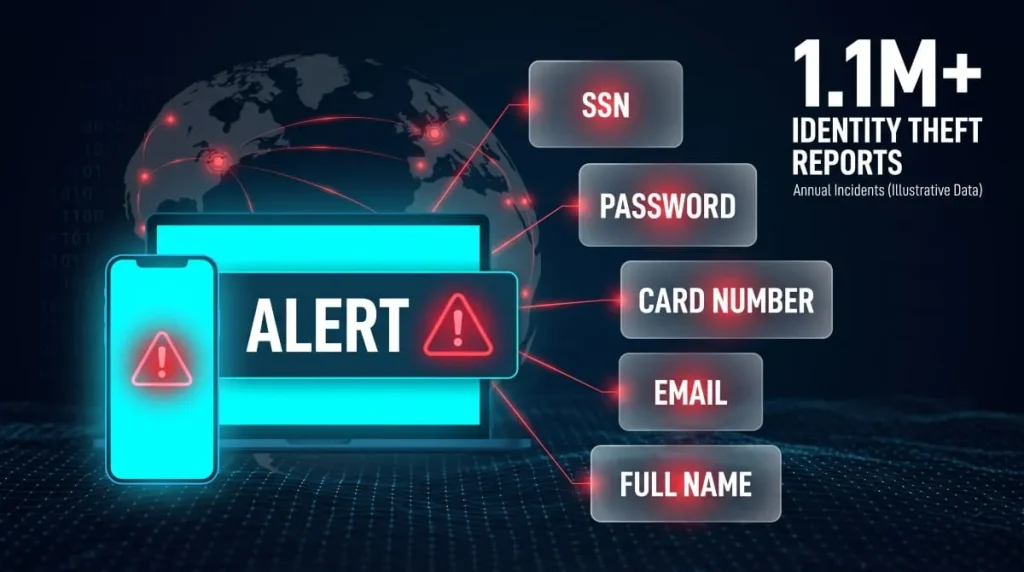
Credential and stealer log channels are among the highest-traffic communities. These dark channels on Telegram distribute username-password combinations, session cookies, and authentication logs harvested by infostealer malware like LummaC2, RedLine, and Stealc. Some channels claim to push thousands of fresh logs daily. The operational model often combines free sample drops with paid subscription tiers, a structure designed to build credibility before monetizing.
Carding and financial fraud groups form another major category. Active carding Telegram channels in 2025 and 2026 circulate stolen credit card data, CVV information, and fullz (complete identity bundles). Some, like the BidenCash CVV channel, function as marketing arms of larger dark web marketplaces, running automated bots that surface stolen card data in real time to demonstrate platform quality.
Hacktivist operations run some of the most visible dark web Telegram groups. Groups like NoName057(16), RipperSec, and Dark Storm Team use Telegram channels to announce DDoS campaigns, recruit volunteers, and broadcast attack results. These aren’t quiet communities; they’re designed for maximum public visibility and operate more like media channels than criminal marketplaces.
Ransomware and breach announcement feeds aggregate victim disclosures, leak previews, and extortion timelines. Threat intelligence teams monitor these closely because ransomware groups frequently announce victims on Telegram before or alongside their own dark web leak sites, providing early warning signals that can compress incident response timelines.
Deepweb discussion groups function like underground forums, covering SQL injection techniques, phishing kit distribution, malware deployment, and access brokering. Some of the longer-running communities, like EMP/mailpass/sqli Chat (established 2019), have evolved into multi-topic hubs where buyers and sellers connect across a wide range of cybercrime services.
The Ten Channel Types Security Teams Should Monitor
Rather than pointing to specific channels that shift, get taken down, and re-emerge under new names, a more durable intelligence framework is to understand the categories of dark web Telegram channels, because those categories are stable even when individual channels aren’t.
1. Stealer log aggregators are the backbone of credential exposure on Telegram. Channels in this category collect logs from multiple infostealer malware families and republish them in centralized feeds. They’re the first place where compromised corporate credentials tend to surface.
2. Breach announcement channels operate as early warning systems. When a ransomware group or independent threat actor compromises an organization, they often announce it on Telegram before any public disclosure. Monitoring these channels can provide days of lead time.
3. Carding and fraud networks are essential for financial institutions, e-commerce platforms, and any organization that handles payment data. Active carding Telegram channels in 2026 move stolen card data at scale, often with geographic filtering (European cards, US cards, etc.) and quality-tiered pricing.
4. DDoS coordination and hacktivist channels are particularly relevant for government agencies, financial services firms, and critical infrastructure operators. These groups announce targets publicly, which makes them unusually monitorable compared to other threat actor types.
5. Ransomware victim feeds aggregate announcements from multiple ransomware operations. For threat intelligence teams, these channels are valuable because they reveal sector-targeting trends and which industries are being hit hardest in a given month.
6. Phishing kit distribution channels circulate templates, cloned website packages, and credential harvesting tools. Security teams monitoring these channels can anticipate upcoming phishing waves targeting their industry before campaigns launch.
7. Access broker groups sell initial access to compromised corporate environments, VPN credentials, RDP sessions, and admin panel footholds. These channels are high-value for understanding pre-attack positioning.
8. Bot-automated intelligence aggregators scrape multiple dark web Telegram sources and republish alerts in a single feed. For security teams, these can supplement manual monitoring workflows, though they require correlation with other intelligence sources to filter noise.
9. Malware sample sharing communities distribute executables, scripts, and builder tools used in active campaigns. Security researchers collect samples here for behavioral analysis and signature development.
10. Crypto scam and drain networks are increasingly relevant as blockchain-adjacent attacks scale. These channels share malicious smart contract scripts, fake wallet interfaces, and drain techniques used against crypto holders and DeFi platforms.
The Question Nobody Asks: Is It Legal?
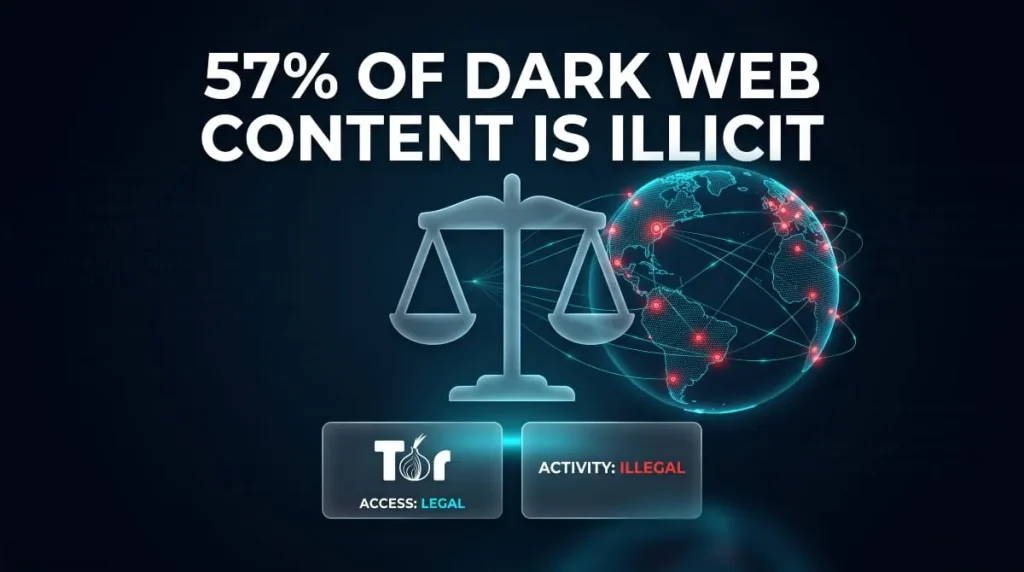
This comes up constantly and deserves a direct answer. Monitoring dark web Telegram channels is generally lawful for cybersecurity purposes, provided you maintain strict read-only practices and observe intelligence without engaging in, purchasing, or facilitating any criminal activity. Most enterprise threat intelligence programs treat these channels exactly as they would any open-source intelligence feed.
That said, legal considerations vary by jurisdiction, and organizations should establish internal policies governing how analysts interact with these environments. The practical OPSEC standard is: anonymized accounts, isolated workstations, VPN routing, and a firm no-engagement policy. You’re there to observe, not participate.
The more nuanced legal question surrounds some content categories. Certain dark telegram channels distribute material that is illegal to possess, regardless of intent, child sexual abuse material being the clearest example. Any legitimate threat intelligence program has hard stops around this content. The presence of that material in some dark web communities is precisely why professional monitoring tools with automated filters exist, rather than direct manual access.
How the Landscape Shifted in 2024–2025
The single biggest change to the dark Telegram channel ecosystem in recent years came in September 2024, when Telegram introduced AI-based content moderation following the arrest of founder Pavel Durov in France. The policy update accelerated what analysts were already calling “The Exodus”, a migration of cybercriminal communities toward alternative platforms, including Signal, Discord, and decentralized messaging networks.

The practical effect for security teams is a more fragmented monitoring environment. High-profile channels that previously operated openly on Telegram have moved or split across multiple platforms. Groups like NoName057(16) had their channels taken down but quickly rebuilt, retaining a fraction of their prior subscriber base during the transition period.
This fragmentation doesn’t make Telegram less important to monitor; it makes comprehensive coverage harder. Organisations that relied solely on Telegram monitoring now need to extend visibility to adjacent platforms where those communities have migrated.
What Separates Useful Intelligence from Noise
The biggest operational challenge in monitoring darknet Telegram channels isn’t access; it’s signal-to-noise ratio. These channels collectively push enormous volumes of data, and most of it isn’t relevant to your organization on any given day.
Effective threat intelligence programs apply several filters to manage this. Keyword monitoring for organization-specific terms, domain names, product names, executive identities, and IP ranges transforms a firehose into an actionable alert stream. Correlation with external data sources (dark web forums, paste sites, ransomware leak sites) helps confirm whether a Telegram mention represents a real incident or opportunistic noise.
The other critical discipline is context. A credential appearing in a dark web Telegram channel list is only meaningful if it maps to an active account with access to sensitive systems. Integrating Telegram intelligence with identity management platforms, access logs, and vulnerability data converts raw exposure into a prioritized response.
Building a Monitoring Program: What Teams Get Wrong
Most organizations that attempt to monitor dark web Telegram channels make one of three mistakes.
The first is going manual too early. Individual analysts scrolling through channels is not scalable and creates unnecessary exposure risk. Automated collection tools should form the base layer, with human analysis applied to triaged alerts.
The second mistake is monitoring without context. Knowing that a credential appeared in a darkweb Telegram channel is only useful if you know whether it is still active, which systems it accesses, and whether the affected account holder has been notified. Intelligence without operationalization is just data collection.
The third mistake is platform myopia: treating Telegram as the whole picture when it’s just one layer of a multi-platform underground ecosystem. Dark web forums, paste sites, ransomware leak sites, and now emerging decentralized platforms all contribute to a complete picture. Telegram dark channel monitoring is a necessary input, not a complete solution.
Notable Dark Web Telegram Groups
While sharing direct links to forbidden channels is unsafe and legally sensitive, several categories are worth monitoring:
- Credential dump channels – frequently updated with hacked credentials.
- Active carding groups 2026 – circulating stolen payment information.
- Risk repost and repost groups – re-sharing high-value hacks or exploits.
- Hacktivist coordination channels – used for politically motivated cyberattacks.
Cybersecurity teams often cross-reference multiple Telegram dark web group lists and analyze these channels using OSINT techniques to ensure comprehensive threat intelligence coverage.
Conclusion
Dark web Telegram channels have become a primary intelligence surface for cybersecurity teams, not because anyone planned it that way, but because threat actors went where the infrastructure worked for them. The channels are faster, more accessible, and, in many cases, more visible than traditional dark web forums, making them both a significant risk vector and a valuable intelligence source for defenders.
The organisations that benefit most from this landscape are those that treat it like any other intelligence feed: structured collection, automated filtering, human analysis of priority alerts, and integration with operational response workflows. The ones that struggle are those who treat it as a curiosity to explore rather than a data source to exploit for defensive advantage systematically.
The dark web Telegram channel list is constantly changing. The underlying categories, the threat actor motivations, and the intelligence value of monitoring them don’t.
Frequently Asked Questions
Are dark web Telegram groups the same as dark web forums?
They overlap in function but differ in structure. Dark web forums typically require Tor access and have more rigorous vetting for membership. Telegram dark groups are more accessible and faster-moving, which is why many threat actors maintain a presence on both. Think of Telegram as the public-facing distribution layer and dark web forums as the higher-trust transaction environment.
How do I know if a Telegram channel is safe to monitor?
There’s no universal safety check, but several signals indicate higher risk: channels that distribute executable files, channels that require you to click external links to access content, and any channel that asks you to authenticate with personal credentials. Analysts should assume any dark channel on Telegram could be conducting counter-intelligence against monitors and act accordingly.
What are the most common scam Telegram channels to be aware of?
In 2025 and 2026, the most prevalent scam channel types impersonating legitimate services include fake crypto investment platforms, impersonation of legitimate tech support channels, and “recovery scam” channels targeting people who have already lost money to fraud. These differ from cybercriminal infrastructure channels but are increasingly relevant for brand protection teams.
Does monitoring these channels require specialized tools?
For individual analysts doing research, Telegram’s native client with isolated accounts is sufficient for basic observation. For organizational threat intelligence programs covering dozens of channels across multiple platforms, dedicated CTI platforms with Telegram ingestion capabilities are the standard approach. The volume and coverage requirements of enterprise monitoring make manual-only approaches impractical.