
Reddit Dark Web Guide | Is It Dangerous, and How to Stay Safe
If you’ve ever searched dark web Reddit looking for answers, here’s the first thing worth clearing up: Reddit itself isn’t the dark web. It’s a surface web forum site; what you’re really looking at are threads where people discuss, debate, and speculate about the dark web, not the dark web itself.
That distinction matters, because Reddit threads about the dark web are filled with questions, debates, horror stories, and firsthand experiences, and it’s easy to walk away more confused than when you arrived. Some users claim it’s a lawless digital underworld. Others say it’s just a misunderstood corner of the internet built around privacy. The truth, as usual, sits somewhere in the middle.
This guide is designed to cut through the exaggeration.
We’ll explain what the dark web actually is, how it differs from the deep web, what people genuinely report finding there, whether it’s dangerous or illegal, how to access the dark web safely if you’re curious, and, most importantly, how to protect yourself. We’ll also cover some of the most-asked questions in this space, like whether there are real dark web subreddits worth knowing about, and one of the most common concerns that shows up in dark web Reddit discussions: What does it mean if your email, phone number, or SSN is found on the dark web?
The goal here isn’t sensationalism.
It’s understanding.
By the end of this guide, you’ll know:
- Whether Reddit is actually part of the dark web (and what it really is)
- Why Reddit discussions often amplify myths
- The real risks versus the exaggerated fears
- How to access the dark web safely, without the hype
- How dark web monitoring alerts actually work
- What practical steps you should take if your data appears in a breach
Whether you’re here out of curiosity, concern, or caution, this page will give you a clear, balanced, and safety-first explanation, all in one place.
Dark Web Reddit
First, a quick clarification: when people say “dark web Reddit,” they almost always mean Reddit threads about the dark web, not Reddit being the dark web. Reddit is a surface web platform; anyone can find it through Google. The dark web is a different, separate layer entirely.
With that cleared up: when people on dark web Reddit threads ask, What is the dark web?, they’re usually imagining something completely separate from the internet they use every day. In reality, it’s still the internet; it just isn’t indexed or easily accessible through regular browsers.
The Dark Web vs the Internet You Use Daily (Surface Web)
Most of what you use online is the surface web: websites that search engines can crawl and display in results. If Google can find it, it’s generally part of the surface web. Reddit, including every dark web Reddit thread you’ve ever read, falls into this category.
The dark web is different. It’s made up of sites and services that aren’t publicly searchable and are intentionally harder to access. That’s why people searching for what is on the dark web Reddit or what’s on the dark web Reddit often feel like it’s mysterious; you can’t just stumble into it while browsing normally, the way you can stumble onto a Reddit thread.
Why the Dark Web Exists
Despite its online reputation, the dark web wasn’t created for crime. The core purpose is privacy.
It exists because some people need or want:
- Anonymity (to reduce tracking or surveillance)
- Censorship resistance (especially in regions with restricted internet access)
- Private communication (where identity and location aren’t easily exposed)
This is why you’ll often see debates like Does the dark web exist? ‘ on Reddit, not because it’s imaginary, but because it’s not visible in the way most people expect the internet to be.
Myth vs Reality: What’s Exaggerated Online
The dark web does have risks and contains illegal content. Still, many popular ideas about it are exaggerated by shock posts, recycled stories, or creepypasta-style threads designed to go viral.
A few myths that get amplified in dark web Reddit discussions:
- Reddit is the dark web, or part of it (it isn’t; it’s a regular, indexed website)
- Everything on the dark web is illegal (not true)
- You’ll get hacked instantly just by visiting it (overstated)
- It’s a completely separate internet (it isn’t)
A more accurate way to think about it is this: the dark web is a privacy-focused layer of the internet that can be used for legitimate reasons, but because anonymity reduces accountability, it also attracts scams, harmful activity, and dangerous spaces.
Dark Web Subreddits Worth Knowing About
If you’re specifically looking for dark web subreddits, a handful of communities consistently come up: r/darknet and r/deepweb host general discussion, questions, and news about anonymity networks, while r/onions focuses more narrowly on Tor’s technical side. r/AskNetsec and r/cybersecurity are useful adjacent communities if your real interest is security and risk rather than the dark web itself.
A caution worth repeating here: subreddits about the dark web are still just discussion forums, not curated, vetted, or safety-checked. Posts and comments can include links to outdated, broken, or actively malicious sites, and there’s no guarantee that what’s shared is accurate or safe. Treat anything posted as unverified by default, and never download a file or run a tool based on a Reddit comment unless you independently confirm what it actually is.
If your goal is understanding how the dark web works rather than exploring it, you’ll get more out of a small number of well-regarded explainer threads than out of any link list, since explainers tend to age better and carry less risk than active directories.
Deep Web vs Dark Web (The Difference Reddit Keeps Debating)
If you’ve spent even five minutes in a dark web vs deep web Reddit thread, you’ve seen the confusion: people use deep web and dark web like they mean the same thing, and they don’t. It’s also where a lot of the “is Reddit dark web” mix-up comes from; Reddit threads discuss both terms so often that people start associating the platform itself with whichever one sounds scarier.
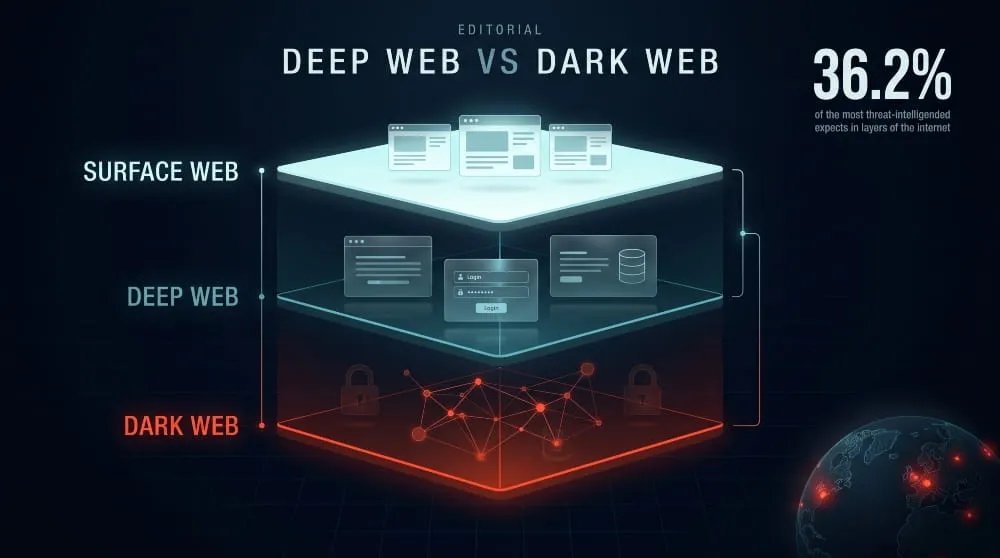
Understanding this difference instantly clears up most of the fear, hype, and misinformation that spreads online.
What the Deep Web Actually Means
The deep web is simply anything online that isn’t indexed by search engines.
That sounds dramatic, but it’s mostly normal internet activity, like:
- Your email inbox
- Online banking dashboards
- Private company portals
- Subscription content behind a login
- Cloud files you need permission to access
So when someone says, “the deep web is huge,” they’re right, but it’s not some underground world. It’s just the internet that’s private by design.
This is why many deep web vs dark web Reddit arguments start on the wrong foot: people assume “not on Google” automatically means dangerous.
What Makes the Dark Web Different
The dark web is a smaller part of the deep web, but it has one key feature:
It’s intentionally designed to provide stronger anonymity and harder traceability for users and site operators.
The dark web isn’t just hidden because it’s private.
It’s hidden because it’s built to be less searchable, less trackable, and more resistant to surveillance. That’s also the real answer to what is on the dark web: not a single mysterious place, but a collection of sites built around that anonymity-first design.
That’s why it’s often discussed as a separate layer of the internet, even though it still runs on the same global infrastructure.
Where Deep Dark Web Fits In
You may also see phrases like deep dark web Reddit in posts and comments. Most of the time, that term isn’t technical; it’s cultural.
People usually use it to mean:
- The really dangerous part of the dark web
- The darkest corners
- The stuff you’re not supposed to see
In reality, there’s no official “deep dark web” category; it’s more of an internet slang term that fuels mystery and fear. It can make the dark web sound like a descending staircase into increasingly disturbing layers, but that framing is mostly exaggeration.
The Simple Way to Remember It
If you want a clear takeaway that settles the dark web vs deep web Reddit confusion:
- Deep web = private content not indexed by Google (mostly normal, and includes things like Reddit’s private messages or your email inbox).
- Dark web = a privacy- and anonymity-focused layer that requires specialized access and carries greater risk.
Now that the difference is clear, the next big question is the one Reddit asks constantly:
Is the dark web dangerous, and is it illegal to access it?
Is the Dark Web Dangerous or Illegal?
This is the question that dominates almost every dark web Reddit discussion: is the dark web dangerous? And is it illegal just to access it? The reason it feels confusing is that people often conflate two distinct ideas: legality and risk. They overlap sometimes, but they aren’t the same thing. Notably, neither concern applies to Reddit itself; the actual risks and legal questions arise only when you’re talking about the dark web proper, not the threads discussing it.
Is It Illegal to Access the Dark Web?
In most places, simply accessing the dark web isn’t automatically a crime. The legal line is usually based on what you do there, not the fact that you visited it. That said, laws vary by country and can change, so it’s always smart to treat this as country-dependent rather than universal.
A helpful way to think about it is this: the dark web is a privacy-oriented layer of technology. Privacy tools themselves aren’t inherently illegal. The problem is that anonymity can make it easier for illegal activity to thrive, so some parts of the dark web are filled with content and communities you don’t want to be near.
That’s why the better question isn’t just “is it illegal,” but “what are the risks of exploring it casually?”
Is the Dark Web Safe?
The short answer most people won’t like: it can be accessible without immediate danger, but it’s not as safe as the surface web feels.
When people ask “Is the dark web safe, Reddit?” they often mean “Can I browse it out of curiosity without consequences?” The reality is that consequences don’t always look like dramatic movie-style hacking. They’re usually more boring and common, like scams, infected downloads, and data exposure.
The Real Risks (What Actually Gets People Burned)
A lot of the danger isn’t the dark web itself. It’s the environment it attracts: more anonymity, less accountability, and a higher concentration of bad actors looking for easy targets.
The biggest risks tend to be:
- Scams and social engineering. The dark web has a heavy buyer-beware culture, and many spaces are designed to manipulate curiosity.
- Malware and poisoned files. Random downloads, unknown links, and free tools are a common trap, even for people who think they’re being careful.
- Doxxing and identity exposure. If you reuse usernames, email addresses, or personal details, it becomes easier to connect your browsing activity to your real identity.
- Leaked data and credential dumps. Many people arrive here after seeing alerts like “your email was found on the dark web,” which can prompt them to click on risky search results.
- Illegal content you didn’t intend to find. Even accidental exposure can create serious legal and ethical problems, depending on where you are and what you view.
This is why is the dark web dangerous shows up as a recurring question on Reddit: the danger isn’t always immediate. Still, it’s very real once you start clicking around without a clear purpose, including clicking through links posted in dark web subreddits without verifying where they actually lead.
The Curiosity Trap (How People End Up in the Wrong Places)
Most people don’t go looking for illegal content. They go looking for answers.
They start with harmless questions like “what’s on the dark web?” or “what can you find there?” Then curiosity pushes them toward lists, forums, and random links. The darker side of the web is built to take advantage of that curiosity: it’s messy, unmoderated, and full of bait, because bait works.
So if your goal is understanding, the smartest approach is to treat the dark web like a high-risk environment: not because it’s a horror movie, but because it’s an ecosystem where trust is low, deception is common, and mistakes can be expensive.
How People Access the Dark Web (Safety-First, Non-Technical Overview)
How to access the dark web: Reddit comes up constantly, and the honest answer is simple: you can’t reach it through Google or a regular browser. It requires a privacy-focused tool, most commonly Tor, which routes your connection through multiple relays to limit tracking. Even then, the tool itself doesn’t make you safe; your behavior once you’re in does.
That single fact resolves most of the confusion in threads asking how to access Reddit’s dark web or the safest way to do so. People expect a complicated technical process. In reality, the access part is almost mechanical. The risk lives entirely in what happens afterward.
Tor works by encrypting your traffic and bouncing it across a volunteer network of relays, typically three or more per connection, so no single point in the chain knows both who you are and what you’re visiting. VPNs come up in the same conversations too, usually as an added privacy layer rather than a replacement for Tor. Neither tool is hacker software; both exist for anonymity and censorship resistance, which is why treating them like shortcuts to “exploring” rather than privacy tools is where most beginner mistakes start.
Common Beginner Mistakes That Lead to Compromise
The dark web becomes risky when curiosity turns into careless clicking. A common pattern: someone wants to see what it’s like, starts pulling random links from a list, trusts unfamiliar sites, and makes ordinary internet decisions in an environment where trust is the wrong default. That’s the moment scams work, malware spreads, and personal information leaks.
The mistakes that cause the most damage are rarely sophisticated. Downloading files from unknown sources, clicking unverified link lists, reusing a personal username or email address, or assuming anonymity is automatic the moment Tor is open- these account for the overwhelming majority of compromises reported in dark web Reddit threads. Even opening a downloaded document in the wrong environment can expose more than people expect.
Safe Browsing Checklist (Practical, Not Paranoid)
If you searched for how to access or browse the dark web safely on Reddit, the right mindset is risk reduction, not exploration. A short, practical checklist covers most of what matters: keep your device patched and updated before doing anything else, since outdated software is one of the most common entry points for compromise; avoid downloads unless you have a specific, legitimate reason; treat every unknown link as hostile by default, since many are bait or simply dead; keep your dark web activity disconnected from any personal email, username, or identifying detail; and assume scams are the norm, not the exception, if something looks too good to be true on the dark web, it is.
That’s the complete answer to how to access the dark web safely: the entry point is a tool, but the safety comes from discipline once you’re inside.
What’s Actually on the Dark Web (What Reddit Users Say You Can Find)
What can you find on the dark web, according to Reddit? Mostly forums, marketplaces, leaked-data sites, and privacy communities, not the cinematic hacker playground people expect. Researchers who’ve mapped onion services consistently find that a large share of dark web content is dead links, abandoned pages, and duplicate mirrors rather than active sites, which matches what most Reddit users report: a messy, stripped-down version of the early internet, slow to load and rough around the edges.
Most people asking what the dark web looks like on Reddit or searching for dark web content on Reddit aren’t trying to buy or join anything. They’re curious and want a realistic picture rather than the movie version. A lot of what people imagine as the dark web is actually just the idea of it, built up by screenshots, recycled stories, and shock content that gets reposted until it feels like firsthand experience.
What Can You Do on the Dark Web?
What can you do on the dark web, based on what Reddit users actually describe? Largely the same things you do on the surface web: read, post, message, browse communities, and access niche information. The real difference is the environment around those actions: more anonymity, far less moderation, and far less reliability.
That includes legitimate use. People use the dark web for censorship resistance in regions with restricted internet access, for research and journalism, or simply to understand how anonymity networks function. It also includes the sketchier side: scams, fraud attempts, and communities that exist specifically because they avoid oversight, which is what makes dark web browsing feel unpredictable even when nothing illegal is involved.
What Can You Find on the Dark Web?
What you’ll find on the dark web breaks down into three broad categories, and understanding them is more useful than any single list of sites. Ordinary, even dull content makes up a large share: forums, mirror sites, privacy communities, and small niche pages that look unremarkable. A second layer is deception, fake services, scam pages, impersonations, and traps built specifically to exploit curiosity. A third, smaller layer is genuinely harmful or illegal material, since reduced accountability gives some operators room to host things that would be removed instantly elsewhere.
The dark web isn’t one place; it’s an ecosystem. And in any ecosystem with this little trust, you’re statistically more likely to run into manipulation than to stumble onto something useful by wandering.
Why “Things to Do on the Dark Web” Is the Wrong Frame
The phrase things to do on the dark web sounds harmless on Reddit, but it quietly encourages exploration without purpose, which is exactly the mindset that leads people into trouble. The dark web rewards a narrow goal, not browsing for entertainment. If your reason for being there is understanding how it works, why it exists, and what the real risks are, you’re fine. The moment the goal shifts to seeing the wildest thing possible, people start chasing link lists and random directories, and that’s where the actual risk begins.
What the dark web looks like, in practice, is a cluttered set of simple pages, slow load times, and frequent dead ends. It feels improvised rather than dangerous, but that lack of polish also means none of the usual trust signals from the surface web apply here. Most of it isn’t dramatic. What is dramatic is how the stories about it spread, especially on Reddit, where the scariest accounts get the most attention regardless of how representative they are.
My Email, Phone, or SSN Was Found on the Dark Web: What It Really Means
If an alert says your email, phone, or SSN was found on the dark web, it almost always means your data appeared in a leaked database, not that someone targeted you personally or that you’ve been near the dark web yourself. On dark web Reddit, this exact scenario drives thousands of nearly identical posts: “email found on the dark web Reddit,” “my email was found on the dark web Reddit,” “my SSN is on the dark web,” “what do I do?” The anxiety is understandable, but the underlying cause is usually mundane: a company you had an account with got breached, and your data is now circulating.
What “Found on the Dark Web” Usually Indicates
An alert naming your email, phone number, or Social Security number typically traces back to one sequence: a service connected to that information experienced a breach, your data ended up in the resulting leaked database, and that database was then reposted, traded, or folded into other leak collections. Once that happens, the same data can keep resurfacing across forums, private channels, and dark web marketplaces for years, which is why an old breach can trigger a “new” alert long after the original incident.
Why This Happens Even If You’ve Never Touched the Dark Web
You don’t need to have done anything risky for your information to end up there. Exposure usually traces back to having an account on a site that got hacked, reusing a password compromised elsewhere, or having details stored by a service you’d forgotten you signed up for. Dark web exposure is, in most cases, a reflection of the security practices of companies you trusted, not a reflection of your own browsing history, which is why people post about email addresses found on dark web Reddit threads with genuine confusion rather than guilt: it’s not a sign you went somewhere wrong; it’s a sign that breach data spreads.
What to Do Immediately
If you’re dealing with an SSN, email, or phone number found on the dark web, the right response is action, not panic. Start with the moves that stop most account takeovers: change passwords on any account tied to that email, especially the email account itself, banking, and primary logins; enable multi-factor authentication everywhere it’s offered; and if you’ve reused that password anywhere else, treat it as urgent, since credential stuffing, reusing one leaked password across multiple sites, remains one of the most common paths attackers use after a breach. If your phone number is involved, watch for SMS-based attacks and unexpected verification texts. If your SSN is involved, the stakes are higher, since it enables identity fraud rather than just account access.
When to Worry More vs. Less
Not every “found on the dark web” alert carries equal weight; the real risk depends on what leaked and how current it is. Worry more when your SSN is exposed, when bank credentials or government ID numbers are involved, or when your primary email account is at risk, since email access often cascades into password resets across other accounts. Worry less, while still taking it seriously, when the exposed data is an old email address you no longer use, mostly public or outdated information, or an email with no accompanying password. Either way, the useful response is the same: treat the alert as a signal that your data may be circulating, and act to reduce its usefulness to anyone trying to exploit it.
Dark Web Monitoring and Scans: How They Work, and What They Can’t Do
Dark web monitoring works by checking whether your personal information appears in known breach databases and leak-trading sites, not by monitoring the entire dark web in real time, as the name implies. That distinction is the difference between a useful tool and a false sense of security. It’s exactly what gets debated in dark web monitoring Reddit and dark web scan Reddit threads: people asking whether these tools actually work, and people panicking after an alert like ’email found on dark web’ Reddit or ‘my SSN is on the dark web, what now?’
What Monitoring Services Can, and Can’t, See
Most dark web monitoring tools search for your data, an email address, phone number, or similar identifier, across databases of exposed credentials and known leak archives, with some services extending into forums or marketplaces as well. Coverage is real but partial: the dark web shifts constantly, large sections are intentionally hidden, and no single provider has complete visibility into everything circulating in underground spaces. That’s the honest answer behind the skepticism in dark web monitoring Google Reddit threads; even the largest providers are checking against a subset of what exists, not the whole of it. A scan can confirm exposure when it finds a match; it can’t certify the absence of exposure just because it found nothing.
Why Alerts Can Feel Confusing
Alerts feel confusing because they don’t always signal something new. Leak data gets recycled constantly, a breach from years ago resurfaces in a fresh combo list, the same email reappears across multiple unrelated dumps, and some reports flag data that’s only loosely tied to actual risk. The cumulative effect is what most people experience as alert fatigue: a growing stack of notifications with diminishing clarity about what any single one actually means. This is the same dynamic behind the mixed reactions in Google dark web report Reddit conversations: the underlying report can be accurate while still feeling alarming, particularly when it doesn’t specify whether the data is old, what exactly was exposed, or what to do next.
How to Use Dark Web Monitoring Without Spiraling
The most useful way to treat a monitoring alert is as an early warning, not a diagnosis: it tells you that your data appears somewhere it shouldn’t, and your job is to translate that signal into a proportionate response. A simple decision tree handles most email on dark web Reddit–style alerts. If the alert involves passwords or your primary email account, take immediate action: secure the account, change the password, and enable MFA. If it involves your phone number, watch for verification-code-based account takeover attempts and move away from SMS-only protection where you can. If it involves your SSN, the response escalates from account security to identity protection, at which point credit monitoring or a credit freeze becomes a reasonable step. If it’s only an old, unused email address with no password attached, the immediate risk is lower, though it’s still worth tightening password reuse habits.
What a Dark Web Scan Actually Gives You
A scan can’t remove your data from circulation once it’s leaked; nothing can. What it does is answer two specific questions: has your information been exposed, and, if so, what needs to be secured first. According to the Identity Theft Resource Center, a single data breach in the U.S. can expose hundreds of millions of records, which is part of why the same email address so often turns up across multiple unrelated leaks. Used this way, dark web monitoring isn’t about eliminating risk; it’s about prioritizing where to act first, so the response is strategic rather than reactive.
Conclusion
If you came here after searching the dark web on Reddit, the short version is this: Reddit isn’t the dark web, but the threads discussing it are usually a reasonable starting point, though they tend to exaggerate. You were probably looking for something simple, a clear explanation without the drama, so here’s the balanced truth.
The dark web is not a mythical underworld detached from the internet. It’s a privacy-focused layer that exists for anonymity and censorship resistance. Still, because anonymity reduces accountability, it also attracts scams, illegal activity, and exaggerated storytelling. Accessing it isn’t automatically illegal in many regions, and it isn’t instantly dangerous the moment you open it. But it is an environment where mistakes are easier to make and consequences harder to undo.
Most viral Reddit threads amplify extremes: horror stories, worst-thing-I-saw posts, dramatic warnings. Those experiences aren’t always fake, but they’re rarely representative of the whole picture. The bigger, more common risk for everyday people isn’t stumbling into cinematic chaos. It’s much simpler: weak passwords, reused credentials, phishing attacks, data breaches, and the disregard of basic security practices.
And when you see an alert like ’email found on the dark web’ or ‘SSN found on the dark web,’ it almost always means your data appeared in a breach, not that you personally wandered into an illegal place. If that’s the situation you’re in right now, the most useful next step is finding out exactly what’s exposed before deciding how worried to be.
Frequently Asked Questions (FAQ’s)
Is Reddit the dark web?
No. Reddit is a regular, indexed surface web platform that anyone can find through Google. What people usually mean by “dark web Reddit” is Reddit threads discussing the dark web, not Reddit being part of it.
What is on the dark web, according to Reddit?
Mostly forums, marketplaces, leaked-data sites, and privacy communities, not the cinematic hacker scene people expect. Reddit users consistently describe it as slower, messier, and far less polished than its reputation suggests.
Is the dark web dangerous?
It’s not automatically dangerous just to access, but it is a higher-risk environment than the surface web. Most real damage comes from scams, malware, and identity exposure, not from simply being present there.
Is it illegal to access the dark web?
In most places, no, simply accessing it isn’t a crime. The legal risk comes from what you do once you’re there, and laws vary by country, so treat this as something that depends on your jurisdiction.
How do you access the dark web safely?
You’ll need a privacy-focused tool, most commonly Tor, which routes your connection through multiple relays to limit tracking. The tool itself doesn’t guarantee safety; avoiding downloads, unverified links, and reused personal details matters more than which tool you use.
Are there dark web subreddits worth following?
A few communities consistently come up, including r/darknet and r/deepweb for general discussion. Treat anything shared there as unverified, since subreddits aren’t moderated for safety or accuracy.
What happens if you accidentally go on the dark web?
Nothing happens just from viewing a page. The risk comes from what you do afterward, like downloading a file or entering personal details, not from accidental exposure itself.
Can the dark web see you back?
Not in the way people assume. Tools like Tor are built to prevent sites from identifying your real location or IP address; the bigger risk is usually you revealing identifying details yourself.
What does it mean if my email, phone, or SSN was found on the dark web?
It almost always means your data appeared in a company’s data breach and is circulating in leaked databases, not that you were personally targeted or that you’ve used the dark web yourself.
Does dark web monitoring actually work?
It can help you learn whether your information appears in known leak collections, but no service can monitor the entire dark web in real time or guarantee full coverage. Treat it as an early warning system, not a complete scan.
What Is a Keylogger? Definition, Types, Detection and Removal (Complete 2026 Guide)
A keylogger is software or hardware that records every keystroke typed on a device, usually without the user knowing. Attackers use keyloggers to steal passwords, card…
Read more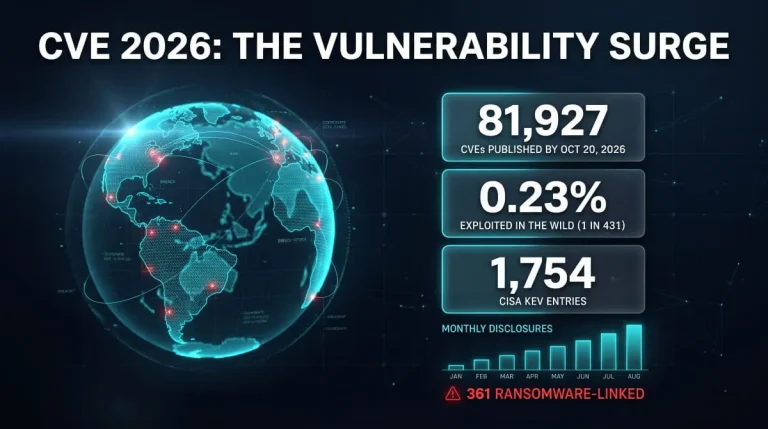
CVE 2026 | The Complete Guide to New, Critical & Actively Exploited Vulnerabilities (Updated Weekly)
CVE 2026 covers every publicly disclosed software flaw assigned a CVE-2026-NNNNN identifier this year, and it is already the largest annual list on record. This guide…
Read more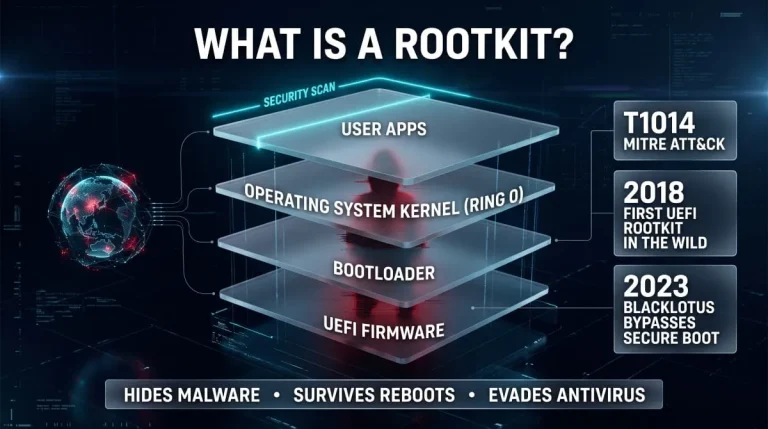
What Is a Rootkit? Definition, Types, Examples, Detection and Removal (Complete Guide)
A rootkit is malicious software that hides itself and the malware it protects by running with the highest privileges and tampering with what the operating system…
Read more